Digital Pianos Review
Yamaha P-525 Review: GrandTouch-S Wooden Keys in a Portable
The P-525 is the flagship of Yamaha's P series: the GrandTouch-S wooden-key action, the CFX and Bosendorfer Imperial concert grands with full Virtual Resonance Modeling and Grand Expression Modeling, binaural sampling for headphones, 256-note polyphony and complete connectivity. This review covers why it is the portable Yamaha pianists choose, where the weight and price bite, and how it compares with the Kawai ES920.
Our Verdict
Research Score 93/100The Yamaha P-525 is the portable to buy if you want Clavinova-class keys and sound without a cabinet. GrandTouch-S puts wooden white keys with escapement under your fingers, the CFX and Bosendorfer samples with VRM and Grand Expression Modeling are the deepest piano engine in any portable, and binaural sampling makes headphone practice remarkable. It weighs 48.5 pounds and costs as much as a mid-range console, which is the only reason to look at the Kawai ES920 instead.
Editorial research score based on published specifications and documented features, not a customer rating or lab test.

Yamaha
Yamaha P-525
Best for: Serious pianists who want Clavinova-grade keys and sound in an instrument without legs
Skip it if: you need a light portable or your budget stops at the mid-range
Check Price on AmazonWe may earn a commission at no extra cost to you.
Listing verified: October 2026
Who Should Buy It
Buy it if
- You practice on acoustic grands and want a portable that feels like one
- You mostly play on headphones and want binaural sampling
- You want the Bosendorfer as well as the CFX
Skip it if
- You carry the piano regularly; the P-225 is half the weight
- Speaker power for a living room is the priority; a console does that better
- You want the stand and pedals included
Key Specifications
| Key Action | GrandTouch-S with wooden white keys and synthetic ivory tops |
| Sound Engine | Yamaha CFX and Bosendorfer Imperial with VRM and Grand Expression Modeling |
| Voices | Not published in listing |
| Polyphony | 256 notes |
| Speakers | Built-in two-way stereo |
| Bluetooth | Audio and MIDI |
| USB | USB audio and MIDI |
| Pedals | Sustain footswitch included; LP-1 triple pedal optional |
| Weight | 48.5 lb (22 kg) per listing |
| Form Factor | Flagship portable |
The Flagship P Series
Yamaha's P series runs from the P-145 through the P-225 to the P-525, and the gap between the second and third is the largest in the line. The P-525 replaces the compact GHC action with GrandTouch-S, the wooden-key action Yamaha fits to its Clavinova CLP-735 and above, and replaces the single CFX voice with both the CFX and the Bosendorfer Imperial, run through full Virtual Resonance Modeling and Grand Expression Modeling. Binaural sampling, recorded with microphones in a dummy head, gives headphone listening a three-dimensional image.
The listing confirms the action, the two grands, VRM, Grand Expression Modeling and binaural sampling; Yamaha's specification adds 256-note polyphony, Bluetooth audio and MIDI, USB audio and line outputs. At 48.5 pounds it is a portable only in the sense that it has no legs.
GrandTouch-S Action
GrandTouch-S uses wooden white keys with synthetic ivory tops, a long pivot, escapement and counterweights, and it is a different class of keyboard from the GHC in the P-225. The wood adds mass and a natural return, the long pivot gives leverage near the fallboard, and the escapement notch at pianissimo is convincing. It is heavier than the Kawai RHIII on the ES920 and closer to an acoustic grand than any other portable we have reviewed except the Yamaha CP88's NW-GH3.
For a pianist who practices on acoustic instruments, GrandTouch-S is the reason to buy the P-525. For a player who finds heavy actions tiring, it is the reason to try before buying.
Two Grands and the Engine
The CFX is Yamaha's bright, focused concert grand; the Bosendorfer Imperial is darker, warmer and wider in the bass, and having both means two genuinely different instruments under one lid. VRM models damper, string, aliquot and body resonance in real time; Grand Expression Modeling tracks how the key is pressed and released to shape the tone the way a grand's hammers and dampers would. The result is the most expressive piano engine in any portable.
Binaural sampling records the CFX from a listener's position so that headphone practice feels like sitting at the piano rather than inside it. With 256-note polyphony nothing drops out, and the two-way speaker system is strong for a portable, though it is not a console's.
Connectivity
Bluetooth audio and MIDI, USB audio and MIDI, left and right quarter-inch line outputs, two headphone jacks, a sustain jack and a port for the LP-1 three-pedal unit cover home, studio and stage. The USB audio path records the piano's own sound into a DAW without an interface. Nothing a home or performing pianist needs is missing.
Setup, Stand and Pedals
The box contains the piano, a music rest, a footswitch and a power adapter. The L-515 stand and LP-1 three-pedal unit turn the P-525 into a slim console with soft, sostenuto and half-damper pedals; an FC3A half-damper pedal is the minimum upgrade. At 48.5 pounds it needs a double-braced X-stand or the furniture stand, and it travels in a heavy-duty case. It is a piano you place, not one you carry weekly.
P-525 Against the Alternatives
Against the Kawai ES920, the P-525 has the wooden action and the two-grand engine with binaural sampling; the Kawai is lighter, cheaper, has 20 watt speakers and an OLED display, and its RHIII action is only a step behind. Against the Casio PX-S7000, the Yamaha wins on action and engine while the Casio includes its stand and pedals and the better speakers. Against Yamaha's own Clavinova CLP-735, the P-525 is the same action and engine in a portable without the cabinet, speakers or three pedals, at a lower price.
Buy the P-525 when the keys and the engine matter more than weight, speakers or included furniture.
Long-Term Fit
Owners of the P-525 rarely replace it with another portable, because nothing above it exists without legs or a stage-piano price. The next steps are Clavinovas and acoustic pianos. Its Virtual Resonance Modeling and two grands keep it interesting for years, and as Yamaha's flagship portable it holds value well. For a pianist who needs an instrument that can move house or studio and still feels like a grand, it is the one to own.
Strengths and Limitations
Strengths
- GrandTouch-S wooden-key action with escapement in a portable
- Two concert grands, the CFX and Bosendorfer Imperial, with full VRM
- Binaural sampling for headphones
- Bluetooth audio and MIDI, USB audio and line outputs
Limitations
- Heavy at 48.5 pounds
- Priced close to a mid-range console
- Three-pedal unit and stand are extra
How We Scored It
Scores reflect published specifications, documented features and value against the alternatives below. They are editorial research scores, not laboratory measurements.
Alternatives to Consider
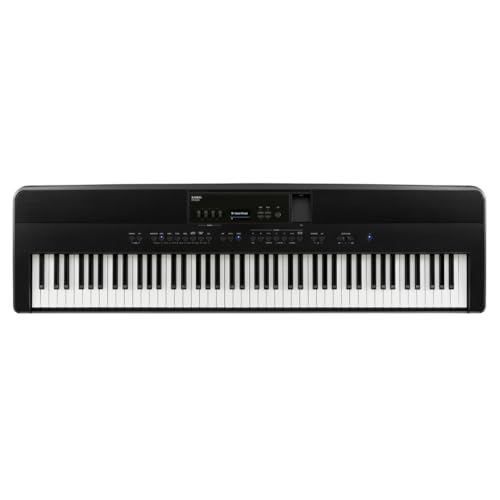
Kawai ES920
Serious pianists who want the best action and sound in a portable before the price of a Kawai console
Read the Kawai ES920 review →
Yamaha P-225
Players who want Yamaha's flagship CFX tone in a slim portable with proper outputs
Read the Yamaha P-225 review →
Casio Privia PX-S7000
Buyers who want a piano that is also a piece of furniture, with a serious action and sound to match
Read the Casio Privia PX-S7000 review →Head-to-Head Comparisons
Questions Buyers Ask
Yamaha P-525
See the current listing, price and included accessories.
About This Review
Mandrillis Team
The Mandrillis editorial team researches and compares audio and music gear using manufacturer documentation, verified specs and real buyer feedback, so you can make a confident purchase without wading through marketing claims.
Read our full research methodology.