Digital Pianos Review
MSTNE LDP40A Review: Complete Budget Semi-Weighted Kit
The MSTNE LDP40A is a budget 88-key semi-weighted digital piano bundle with a stand, bench, sustain pedal, padded case, headphones, and Bluetooth audio and MIDI. The listing promises 128 tones, 64-note polyphony, dual 20-watt speakers, and touch-sensitive keys, but key action and total weight are limited on paper.
Our Verdict
Research Score 70/100The MSTNE LDP40A is a budget beginner bundle that covers nearly every accessory a new player needs. The published specifications include 88 semi-weighted touch-sensitive keys, 64-note polyphony, 128 tones, dual 20-watt speakers, Bluetooth audio and MIDI, dual headphone jacks, and a record function. The included stand, bench, pedal, case, headphones, stickers, and cloth cover make setup convenient. However, the semi-weighted action will not satisfy players who want graded hammer realism, and the listing omits total weight and some sound details. For first-time learners and casual home use, it is a sensible package. For advancing pianists, a dedicated hammer-action model is a better long-term fit.
Editorial research score based on published specifications and documented features, not a customer rating or lab test.

MSTNE
MSTNE LDP40A
Best for: Beginners and casual players who want a complete budget piano package with accessories, Bluetooth, and quiet practice options in one box.
Skip it if: You need a fully weighted hammer action, proven piano sound quality, or published weight and portability details.
Check Price on AmazonWe may earn a commission at no extra cost to you.
Listing verified: October 2026
Who Should Buy It
Buy it if
- Beginners building a practice space from scratch
- Students who need silent practice with dual headphone jacks
- Casual players who want Bluetooth audio and MIDI for apps
- Buyers who prefer a bundle over selecting accessories separately
Skip it if
- You have experience and require graded hammer action
- You need stage-grade outputs or 5-pin MIDI
- You must know total carry weight before purchase
Key Specifications
| Keys | 88 full-size semi-weighted keys |
| Key action | Semi-weighted, touch-sensitive |
| Polyphony | 64 |
| Sounds | 128 tones, 80 demo songs, 128 present rhythms |
| Speakers | 2 x 20W built-in stereo speakers |
| Connectivity | USB to computer, tablet or smartphone; dual headphone jacks |
| Bluetooth | Dual Bluetooth: audio and MIDI |
| Pedals included | Metal sustain pedal |
| Weight | Not published in listing |
| Included accessories | Double-X stand, piano bench, metal sustain pedal, padded carrying case, headphones, key stickers, cloth cover |
Overview
The MSTNE LDP40A is a budget 88-key digital piano package aimed at beginners. The listing describes a full-size semi-weighted keyboard with touch-sensitive keys, 64-note polyphony, 128 tones, 80 demo songs, 128 preset rhythms, and dual 20-watt stereo speakers. It also includes a double-X stand, adjustable bench, metal sustain pedal, padded carrying case, headphones, key stickers, and a cloth cover. On paper this bundle removes the need to buy several beginner accessories separately and offers a ready made practice setup.
The product sits in a budget tier and competes with simple entry-level keyboards and some portable digital piano bundles. It is not a dedicated hammer-action digital piano, and the listing does not publish total weight or assembled dimensions. The semi-weighted action and Bluetooth connectivity are notable for the price, but buyers should treat some specifications as basic rather than flagship. The review below is based only on the published listing, not on a physical evaluation of the unit.
Compared with well known entry models such as the Yamaha P-145, Roland FP-10, Casio PX-S1100, and Kawai ES120, the LDP40A does not claim graded hammer action. It is positioned closer to budget bundles like the Donner DEP-20 or Alesis Recital Pro in spirit, though those also vary in action type and accessory sets. The MSTNE package emphasizes convenience and a complete starter kit over acoustic piano realism. That makes it a practical choice for first time players who need a low cost home practice station.
Key Action
The listing states that the LDP40A has 88 full-size semi-weighted keys with touch sensitivity. Semi-weighted action typically uses springs or light weights to create more resistance than an unweighted keyboard, but it does not replicate the graded hammer mechanism of an acoustic piano. Touch sensitivity means the instrument responds to playing velocity, so harder strikes produce louder tones and softer touches produce quieter ones. This can help beginners develop basic dynamic control without the weight of a true hammer action.
Because the key action is semi-weighted rather than fully weighted, advanced players may find the feel less satisfying than entry models with graded hammer action such as the Yamaha P-145 or Roland FP-10. The listing does not mention graded weights, escapement simulation, aftertouch, or key pivot length. Buyers who want a more realistic piano feel should see this as a lower-cost step below those hammer-action options. For a first instrument, the LDP40A action is likely adequate but not deeply expressive.
The touch-sensitive claim is useful, but the listing does not provide key travel, pivot length, key surface texture, or the number of velocity layers. Without a direct evaluation, the accuracy of the dynamic response cannot be verified. However, semi-weighted keys are often lighter and quieter than fully weighted actions, which can be beneficial in shared living spaces. Beginners can still learn finger placement, note reading, and basic dynamic contrast, but transitioning to an acoustic piano later will require an adjustment period.
Piano Sound and Speakers
The LDP40A uses an Advanced French Dream sound source according to the listing. It offers 64-note polyphony, which is enough for many beginner pieces but can drop notes in dense classical or layered arrangements. The listing also includes 128 tones, 80 demo songs, and 128 preset rhythms. Built-in stereo speakers are rated at 20 watts per side. That output may be sufficient for small rooms and practice, but the actual sound quality depends on sample quality and speaker cabinet design.
The listing does not publish the number of velocity layers or the size of the main piano sample. Some budget instruments rely on short samples or looped decays, which can sound less natural than more expensive models. The 20-watt speakers are a meaningful step up from the tiny drivers found on portable keyboards, but they are not room-filling stage monitors. Buyers should expect clear practice volume rather than deep bass or concert-level projection.
Bluetooth audio can stream backing tracks through the piano speakers, which adds flexibility for play-along sessions. The built-in rhythm patterns can support timing practice, and 128 tones allow exploration beyond acoustic piano. Still, without a direct sound evaluation, the realism of the primary piano tone remains an unknown. The published specification is promising for the price but not conclusive, and players who prioritize piano authenticity may need to try the instrument before committing.
Features and Modes
The feature set of the MSTNE LDP40A is oriented around beginner practice. The record and playback function lets players capture a performance with a single touch, which is useful for checking progress or sharing with a teacher. The listing mentions dual headphone outputs, so two people can listen quietly at once. This makes the instrument practical for shared living spaces or late-night practice without disturbing others.
The dual Bluetooth implementation is a highlight. Audio Bluetooth allows wireless streaming from a phone or tablet, while MIDI Bluetooth supports connecting to music apps without a cable. The listing also mentions a USB connection to computers, tablets, and smartphones for multimedia interaction. These features add educational flexibility beyond the built-in sounds and rhythms, and they are not always present at this budget tier.
The 128 tones include likely pianos, electric pianos, organs, strings, and synth sounds, though the listing does not list specific categories. The 128 preset rhythms can provide a backing groove for practice, and the 80 demo songs may serve as learning references. The record function is a simple convenience rather than a multitrack studio tool, but for a beginner it supports self assessment and lesson review.
- 88 semi-weighted touch-sensitive keys
- 128 tones and 128 preset rhythms
- 64-note polyphony
- Dual Bluetooth audio and MIDI
- Record and playback function
- Dual headphone outputs
Build, Design and Portability
The LDP40A has a wood finish and an environmentally friendly, odorless process according to the listing. The keyboard itself measures 50.6 inches long, 10.4 inches wide, and 3.1 inches high. The included double-X stand adjusts from 17 to 42 inches, and the bench has a 12 inch width, 16 inch length, 2 inch cushion, with four-level height adjustment from 16.7 to 19.5 inches. These dimensions suggest a standard full-size 88-key layout that fits typical home spaces.
The listing does not publish the total weight of the piano, stand, bench, or packaged bundle. Without a weight figure, portability is hard to judge. The padded carrying case indicates some intent for transport, but a double-X stand and bench add bulk. For most beginners, this will likely stay in one room, but the case allows occasional moves and protection during storage.
The wood finish gives the keyboard a more furniture-like look than plain black plastic, though it is not real wood. The double-X stand is described as heavy duty and height adjustable, which suggests reasonable stability for a semi-weighted keyboard. The bench cushion is listed as 2 inches thick, providing basic comfort for short practice sessions. The listing does not state whether the stand folds flat or whether the bench has storage, so buyers should not assume extra convenience features beyond the listed dimensions.
Connectivity
The LDP40A includes dual headphone jacks, Bluetooth audio, Bluetooth MIDI, and a USB port for wired connection to computers, tablets, and smartphones. Bluetooth audio can stream music and lessons through the piano speakers, while Bluetooth MIDI supports apps for notation, learning, or sound expansion. The USB connection offers a stable wired option for multimedia interaction and may also allow the piano to work as a MIDI controller.
The listing does not mention line outputs, auxiliary input, or 5-pin MIDI DIN ports. That means connecting to external amplifiers, mixers, or older MIDI gear may require additional hardware not included. For a home beginner setup, the provided connectivity is usually enough. Bluetooth and USB cover the most common educational and app-based workflows, while the dual headphone jacks make private practice easy.
One limitation is that Bluetooth audio may introduce some latency when playing along with streamed content, though the listing does not specify latency performance. The USB connection is likely more reliable for real-time MIDI use. Buyers who plan to use software instruments should consider using the USB connection for lower latency, and the Bluetooth audio is best for playback rather than performance input.
Setup and Accessories
The package includes a double-X stand, piano bench, metal sustain pedal, padded waterproof carrying case, headphones, key stickers, and a cloth cover. The listing states all these items come in one package, which reduces the time spent selecting accessories. The stand height is adjustable from 17 to 42 inches, and the bench adjusts for different players, helping both children and adults find a comfortable playing position.
Assembly details are not fully described in the listing. The double-X stand usually requires simple folding and tightening, but the listing does not specify included tools or instructions. The metal sustain pedal should feel more durable than plastic pedals often bundled with budget keyboards. The key stickers and cloth cover are beginner-friendly extras that support learning note names and maintaining the instrument.
The padded carrying case and headphones are practical additions, but their quality is not specified. Buyers may eventually replace the headphones or pedal as their needs grow. The listing's promise of a 100 percent satisfaction experience is a support message rather than a measurable hardware feature. Even so, the accessory set is unusually complete for this price tier and reduces initial setup hassle.
Daily Use
On a daily basis, the MSTNE LDP40A should suit a beginner who wants to practice quietly, follow lessons, and track progress. The dual headphone outputs allow a parent or teacher to listen alongside the student without disturbing others. The record function can capture short performances, and the touch response encourages some dynamic expression. The adjustable stand and bench help maintain a reasonable playing posture during longer sessions.
The 20-watt speakers provide enough volume for a small room, while Bluetooth audio lets the player stream accompaniments. The 128 rhythms and 80 demo songs can support timing and repertoire familiarization. The semi-weighted keys may not satisfy an advanced player over time, but for daily beginner practice the feature set is convenient. The lack of published weight means moving the assembled setup frequently may not be simple, so it works best as a stationary home station.
The cloth cover helps keep dust off the keys when not in use. The padded case adds protection if the keyboard is stored or moved occasionally. Because the listing lists a carry case but not total weight, the daily routine may lean toward stationary use with occasional transport. The dual headphone design is especially useful for late night practice, and the record function allows students to review their own playing without needing extra equipment.
Who Should Buy It
The LDP40A is best for complete beginners and casual players who want a single purchase that covers the essential accessories. It suits students who need quiet practice with headphones and app connectivity. Buyers who prefer a furniture-like wood finish and adjustable height options will appreciate the included stand and bench. The budget price tier makes it accessible for first-time learners and families setting up a home practice area.
This is not the right choice for intermediate or advanced players who already notice the difference between semi-weighted and hammer action. Buyers who need stage-ready outputs, 5-pin MIDI, or known total weight should look elsewhere. If the primary piano tone is the top priority, the unpublished sample details make comparison difficult without trying the instrument against models like the Yamaha P-145 or Roland FP-10.
Teachers and parents may find the bundle useful for a first instrument because the accessories are included and the dual headphone outputs support guided practice. However, the semi-weighted action means a student may eventually outgrow it. For casual hobbyists who want a Bluetooth-enabled keyboard with rhythms and a complete furniture setup, the LDP40A offers strong convenience for the price.
Verdict
The MSTNE LDP40A delivers a strong first piano bundle for the price. Its semi-weighted action provides more resistance than unweighted keys, and the touch sensitivity supports basic dynamics. The dual Bluetooth, record function, 20-watt stereo speakers, and extensive accessory set give beginners a practical practice package in one box.
The main limitations are the semi-weighted action, which will not feel like an acoustic piano, and the missing total weight and some detailed specifications. Players who expect graded hammer action or stage connectivity should consider dedicated hammer-action models. The listing's published features are respectable for a budget instrument, but the real-world sound and key feel remain unverified without a direct evaluation.
Overall, the LDP40A is a value-focused choice for a first time buyer who wants everything in one package. It does not compete with mid-range hammer-action pianos, but it offers a sensible introduction to piano playing. If the buyer's priority is convenience, accessories, and quiet practice convenience, this kit is worth shortlisting. If the priority is authentic piano touch and sound, a model with graded hammer action is a better long-term investment.
Strengths and Limitations
Strengths
- Complete beginner bundle with stand, bench, sustain pedal, case, headphones, key stickers, cloth cover
- Dual Bluetooth for wireless audio and MIDI
- Dual 20W speakers with 64-note polyphony
- Touch-sensitive semi-weighted keys for dynamic practice
- Adjustable stand and bench height
- Record and playback function for practice review
Limitations
- Semi-weighted action is not a graded hammer action
- Total weight and some specs are not published in the listing
- No line outputs or MIDI DIN ports listed
- Speaker and tone realism unverified without a direct evaluation
- Smaller key feel may not satisfy advanced players
How We Scored It
Scores reflect published specifications, documented features and value against the alternatives below. They are editorial research scores, not laboratory measurements.
Alternatives to Consider

Donner DEP-20
Budget buyers who want weighted keys, loud speakers and a large sound library in one box
Read the Donner DEP-20 review →
Alesis Recital Pro
Beginners who want hammer-action keys and loud speakers for the least money
Read the Alesis Recital Pro review →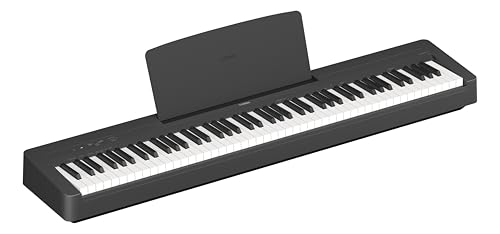
Yamaha P-145
Beginners who want the current Yamaha entry model with app control and a slim footprint
Read the Yamaha P-145 review →Head-to-Head Comparisons
- MSTNE LDP40A vs Melentro MP3 Compare →
Questions Buyers Ask
MSTNE LDP40A
See the current listing, price and included accessories.
About This Review
Mandrillis Team
The Mandrillis editorial team researches and compares audio and music gear using manufacturer documentation, verified specs and real buyer feedback, so you can make a confident purchase without wading through marketing claims.
Read our full research methodology.