Best Classical Guitars: Nylon-String Picks From Student to Stage
This guide helps students, returning players, and working guitarists choose a classical guitar based on listing specifications, scores, and best use cases. We considered 125 researched nylon string models and selected eight picks across student, stage, and value needs. The choices focus on solid tops, traditional neck dimensions, onboard electronics where available, and budget friendly designs. No in-person testing was performed. Each pick is scored for playability, tone, build and materials, hardware and electronics, versatility, and value.
Quick Answer
Best overall is the Cordoba C5 because it pairs a solid cedar top, mahogany back and sides, and a traditional 52mm nut width with a lower midrange price. For the best value choose the Cordoba C3M, which scores highest overall with a solid cedar top, rosewood fingerboard, and light matte finish. Beginners on a tighter budget should look at the Yamaha C40II, a simple full size spruce top classical. If you need amplified performance, the Cordoba C5CE adds a Fishman Presys II preamp and soft cutaway.
Why You Can Trust This Guide
We compared products using verified manufacturer specifications, available manuals and documentation, retailer listings, owner feedback, and editorial research.
We focus on measurable differences such as performance, compatibility, usability, build quality, features, and value.
Mandrillis presents editorial research as editorial research, not as laboratory testing, unless physical testing was actually performed.
Read our full research methodology.
Quick Picks
Comparison Table
| Model | Body shape | Top | Back and sides | Electronics | Best For | Main Advantage | Score |
|---|---|---|---|---|---|---|---|
| Cordoba C5 | Classical | Solid Cedar | Mahogany | Not published in listing | Entry level and returning classical guitarists who want a solid cedar top and a traditional 52mm nylon string feel. | Solid cedar top | 77/100 |
| Yamaha C40II | Full size classical | Spruce | Meranti | Not published in listing | The Yamaha C40II is best for beginners and casual players who want a budget full size classical guitar from a reliable brand without electronics or extra features. | Budget friendly full size classical from a trusted brand | 68/100 |
| Cordoba C3M | Full size classical | Solid cedar | Mahogany | None listed | Beginner and intermediate players wanting a full size classical guitar with a solid cedar top and traditional fan bracing at a lower midrange price. | Solid cedar top with traditional Spanish fan bracing | 80/100 |
| Yamaha CG122MCH | Classical | Solid Cedar | Not published in listing | Not published in listing | Beginners and students who want a solid cedar top classical guitar at a lower mid-range price. | Solid cedar top brings warm, responsive classical tone on paper | 75/100 |
| Takamine GC1 | Classical | Spruce | Mahogany back, mahogany sides | None listed | Students and casual players seeking a lower midrange classical guitar with a traditional nylon string voice and simple appointments. | Traditional spruce and mahogany tonewood set | 67/100 |
| Epiphone PRO-1 Classical | Classical style | Not published in listing | Mahogany | Not published in listing | Best for beginners and students who want a traditional classical nylon string guitar for lessons and home practice. | Student friendly EZ-Profile D neck with 2 inch nut | 68/100 |
| Cordoba C5CE | Classical with soft cutaway | Solid cedar | Mahogany (solid vs laminate not specified) | Fishman Presys II preamp | Players seeking a mid-range nylon-string acoustic-electric with a solid cedar top, cutaway, and built-in electronics for practice and performance. | Solid cedar top for warm, clear tone | 78/100 |
| Washburn C5 | Classical | Spruce | Catalpa | Not published in listing | A budget classical guitar for beginners or second instrument players who want a spruce top and traditional classical tuners without spending mid-range money. | Spruce top listed for resonance and full tone | 60/100 |
#1. Cordoba C5 (Best Overall)

Mandrillis Research Score: 77/100
This is an editorial research score, not a customer rating or laboratory test score.
Who Should Buy It
- Beginner classical students
- Nylon string fingerstyle players
- Bossa nova and Latin music learners
- Players seeking a solid top upgrade from laminate
Skip It If
- Steel string strummers
- Players needing onboard electronics
- Buyers who require an included gig bag and full published specs
Pros
- Solid cedar top
- Mahogany back and sides
- 52mm classical nut width
- Nylon string comfort for beginners
- Lower mid-range value
- Savarez Cristal Corum high tension strings included
Cons
- No electronics published
- Tuner brand and ratio unspecified
- No gig bag included
- Finish and scale length not published
- High tension strings may feel firm for absolute beginners
Key Specs
Body shape: Classical
Top: Solid Cedar
Back and sides: Mahogany
Neck and fingerboard: Not published in listing
Scale length: Not published in listing
Nut width: 52 mm
Electronics: Not published in listing
Tuners: Not published in listing
Finish: Not published in listing
Included accessories: Not published in listing; model is identified as without a gig bag
Why We Picked It
The Cordoba C5 earns best overall for its solid cedar top, mahogany back and sides, and a 52mm classical nut width that suits traditional nylon string technique. The listing notes Savarez Cristal Corum high tension strings are included, while no electronics or gig bag are specified. It fits entry level and returning players who want a warm cedar voice without moving to a higher price tier.
Read our full Cordoba C5 review →
Check Price on AmazonWe may earn a commission at no extra cost to you.
Last verified: October 2026
Why This Product Ranks Best Overall
#2. Yamaha C40II (Best for Beginners)

Mandrillis Research Score: 68/100
This is an editorial research score, not a customer rating or laboratory test score.
Who Should Buy It
- Beginners and students starting classical guitar lessons
- Parents buying a first nylon string instrument for a child
- Steel string players wanting an affordable practice classical
- Value minded buyers who trust Yamaha consistency
Skip It If
- You need a pickup or onboard tuner
- You want a solid top or all solid acoustic
- You require exact nut width and scale length before buying
- You play primarily steel string strumming styles
Pros
- Budget friendly full size classical from a trusted brand
- Spruce top described for clear nylon string attack
- Rosewood fingerboard and bridge add a familiar feel
- Simple acoustic design with no batteries or pickup to maintain
- Gloss finish for traditional look and easy cleaning
Cons
- Scale length and nut width not published in listing
- No electronics or included accessories mentioned
- Tuner type and neck wood not listed
- Likely laminate tonewoods, which limit resonance
- Factory setup quality unknown
Key Specs
Body shape: Full size classical
Top: Spruce
Back and sides: Meranti
Neck and fingerboard: Neck wood not published in listing; Rosewood fingerboard
Scale length: Not published in listing
Nut width: Not published in listing
Electronics: Not published in listing
Tuners: Not published in listing
Finish: Gloss finish
Included accessories: Not published in listing
Why We Picked It
The Yamaha C40II is best for beginners because it offers a budget friendly full size classical body with a spruce top, rosewood fingerboard, and a simple gloss finish. The listing does not publish scale length or nut width, and no electronics are mentioned. It suits players who want a reliable no frills acoustic from a trusted brand for lessons and casual practice.
Read our full Yamaha C40II review →
Check Price on AmazonWe may earn a commission at no extra cost to you.
Last verified: October 2026
Why This Product Ranks Best for Beginners
#3. Cordoba C3M (Best Value)

Mandrillis Research Score: 80/100
This is an editorial research score, not a customer rating or laboratory test score.
Who Should Buy It
- Beginners wanting softer nylon strings
- Students in classical guitar programs
- Players seeking a solid cedar top under a lower midrange budget
- Those who like matte finish and traditional classical appointments
Skip It If
- You prefer steel string acoustic tone
- You need onboard electronics
- You require exact scale length and nut width specs from the listing
Pros
- Solid cedar top with traditional Spanish fan bracing
- Mahogany back and sides for warm response
- Rosewood fingerboard and gold tuners with pearl buttons
- Light matte finish feels comfortable and reduces glare
- Nylon strings are softer for beginner fingers
- Full size classical body with hand inlaid wooden rosette
Cons
- Scale length and nut width are not published in the listing
- No electronics or included case listed
- Back and sides not described as solid wood
- No string brand or setup details provided
Key Specs
Body shape: Full size classical
Top: Solid cedar
Back and sides: Mahogany
Neck and fingerboard: Neck not published in listing; fingerboard rosewood
Scale length: Not published in listing
Nut width: Not published in listing
Electronics: None listed
Tuners: Gold tuning machines with pearl buttons
Finish: Light matte
Included accessories: Not published in listing
Why We Picked It
The Cordoba C3M is the best value pick with the highest overall score. It includes a solid cedar top, mahogany back and sides, rosewood fingerboard, light matte finish, and gold tuning machines with pearl buttons. Traditional Spanish fan bracing is listed. Scale length and nut width are not published, but the combination of tonewoods and appointments delivers strong lower midrange value.
Read our full Cordoba C3M review →
Check Price on AmazonWe may earn a commission at no extra cost to you.
Last verified: October 2026
Why This Product Ranks Best Value
#4. Yamaha CG122MCH (Best Cedar Top)

Mandrillis Research Score: 75/100
This is an editorial research score, not a customer rating or laboratory test score.
Who Should Buy It
- Classical guitar students looking for an affordable solid top instrument
- Fingerstyle players who prefer nylon strings and warm cedar tone
- Beginners wanting a low action, easy on the fingers nylon string guitar
- Buyers who prioritize a matte finish and durable neck construction
Skip It If
- You need a steel-string acoustic for strumming or folk
- You require built-in electronics for stage or recording
- You want full published specifications including nut width and back woods
Pros
- Solid cedar top brings warm, responsive classical tone on paper
- Three-ply neck construction improves resistance to warping
- Rosewood fingerboard and bridge add familiar classical feel
- Advertised low string action suits beginner fingers
- Natural matte finish reduces glare and feels smooth
- Standard 25.6-inch scale with 19 frets fits traditional classical reach
Cons
- Back and side tonewoods are not listed, limiting tonal assessment
- No electronics or pickup are specified for amplified use
- Nut width is not published, important for hand size matching
- Tuners are unspecified, so tuning stability is uncertain
- No included case or accessories are mentioned
Key Specs
Body shape: Classical
Top: Solid Cedar
Back and sides: Not published in listing
Neck and fingerboard: 3-ply neck; Rosewood fingerboard
Scale length: 25.6 inches
Nut width: Not published in listing
Electronics: Not published in listing
Tuners: Not published in listing
Finish: Natural Matte
Included accessories: Not published in listing
Why We Picked It
The Yamaha CG122MCH is chosen for its warm solid cedar top and advertised low string action, which suits beginner fingers. The three ply neck and rosewood fingerboard add stability and familiar feel, and the 25.6 inch scale with 19 frets fits traditional classical reach. Back and side tonewoods are not published, so tonal assessment is partial, but the cedar top remains the highlight.
Read our full Yamaha CG122MCH review →
Check Price on AmazonWe may earn a commission at no extra cost to you.
Last verified: October 2026
Why This Product Ranks Best Cedar Top
#5. Takamine GC1 (Best Satin Finish)

Mandrillis Research Score: 67/100
This is an editorial research score, not a customer rating or laboratory test score.
Who Should Buy It
- Beginning classical guitar students on a budget
- Steel string players curious about nylon string tone
- Casual fingerstyle and Latin music players
- Buyers who want a simple acoustic only classical guitar
Skip It If
- You require onboard electronics or stage amplification
- You need a cutaway for upper fret access
- You want published scale length and nut width before buying
Pros
- Traditional spruce and mahogany tonewood set
- Rosewood fingerboard adds familiar feel
- Gloss natural finish and mosaic rosette add visual appeal
- Lower midrange price from a known brand
- Nylon string classical design suits beginners and fingerstyle
- No electronics means simple, lightweight acoustic
Cons
- Listing does not specify solid versus laminate top
- No scale length or nut width published
- Tuner hardware and quality not listed
- No onboard electronics for amplified playing
- No included case or gig bag mentioned
Key Specs
Body shape: Classical
Top: Spruce
Back and sides: Mahogany back, mahogany sides
Neck and fingerboard: Mahogany neck, rosewood fingerboard
Scale length: Not published in listing
Nut width: Not published in listing
Electronics: None listed
Tuners: Not published in listing
Finish: Gloss natural
Included accessories: Not published in listing
Why We Picked It
The Takamine GC1 stands out for its gloss natural finish and traditional spruce and mahogany tonewood set with a rosewood fingerboard. The listing mentions a mosaic rosette and no electronics, keeping the design simple. Scale length and nut width are not published, and solid versus laminate top is not specified. It serves students and casual players seeking a lower midrange classical voice.
Read our full Takamine GC1 review →
Check Price on AmazonWe may earn a commission at no extra cost to you.
Last verified: October 2026
Why This Product Ranks Best Satin Finish
#6. Epiphone PRO-1 Classical (Best Budget)

Mandrillis Research Score: 68/100
This is an editorial research score, not a customer rating or laboratory test score.
Who Should Buy It
- Beginner classical guitar students
- Fingerstyle players wanting a budget nylon string
- Steel string players seeking a second practice guitar
- Players who like a wider 2 inch nut and slim D neck
Skip It If
- You need onboard electronics for stage or recording
- You prefer a narrower steel string nut width
- You want a guitar with a known solid top or premium tonewoods
Pros
- Student friendly EZ-Profile D neck with 2 inch nut
- Rosewood fingerboard with PRO-Ease lubricant for smooth feel
- Mahogany back and sides for warm classical tone on paper
- 16:1 tuners support accurate tuning
- Budget tier price makes it accessible
- Traditional classical string spacing for proper technique
Cons
- Top wood not published, unknown tone contribution
- No electronics listed for amplified use
- Scale length and body dimensions not stated
- No included accessories published
- Laminate construction likely at this price but unconfirmed
Key Specs
Body shape: Classical style
Top: Not published in listing
Back and sides: Mahogany
Neck and fingerboard: Mahogany neck, rosewood fingerboard
Scale length: Not published in listing
Nut width: 2 inches
Electronics: Not published in listing
Tuners: 16:1 ratio tuning gears
Finish: Antique Natural
Included accessories: Not published in listing
Why We Picked It
The Epiphone PRO-1 Classical is the best budget option because it includes a student friendly EZ-Profile D neck with a 2 inch nut, rosewood fingerboard with PRO-Ease lubricant, and 16:1 tuning gears. Mahogany back and sides are listed, but the top wood is not published. It is designed for beginners and students who need traditional classical string spacing at an accessible price.
Read our full Epiphone PRO-1 Classical review →
Check Price on AmazonWe may earn a commission at no extra cost to you.
Last verified: October 2026
Why This Product Ranks Best Budget
#7. Cordoba C5CE (Best Acoustic-Electric)
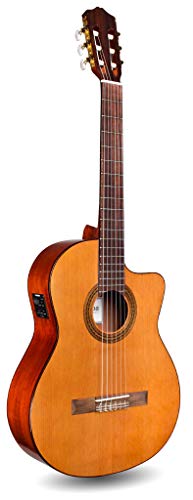
Mandrillis Research Score: 78/100
This is an editorial research score, not a customer rating or laboratory test score.
Who Should Buy It
- Beginning and intermediate classical guitarists
- Steel-string players wanting a softer nylon-string alternative
- Performers needing a stage-ready classical with electronics
- Buyers who value handmade Spanish-style appointments
Skip It If
- You require specific nut width and scale length before purchasing
- You want an all-solid wood guitar with fully specified tonewoods
- You do not need electronics or cutaway and prefer a simpler classical
Pros
- Solid cedar top for warm, clear tone
- Mahogany back and sides add depth and sustain
- Soft cutaway improves upper-fret access
- Fishman Presys II preamp for stage and studio
- Nylon strings are comfortable for beginners
- Handmade Spanish-style details like inlaid rosette and Pau Ferro binding
Cons
- Scale length and nut width are not published
- Back and sides material type not specified
- Tuner brand and hardware details are not listed
- No included gig bag or case mentioned
Key Specs
Body shape: Classical with soft cutaway
Top: Solid cedar
Back and sides: Mahogany (solid vs laminate not specified)
Neck and fingerboard: Not published in listing
Scale length: Not published in listing
Nut width: Not published in listing
Electronics: Fishman Presys II preamp
Tuners: Not published in listing
Finish: Glossy polyurethane (PU)
Included accessories: Savarez strings (other accessories not published)
Why We Picked It
The Cordoba C5CE is the best acoustic electric pick for its solid cedar top, soft cutaway, and Fishman Presys II preamp. Mahogany back and sides are listed but solid versus laminate is not specified. The glossy polyurethane finish and handmade style inlaid rosette add stage appeal. It fits players who want an amplified nylon string guitar for practice and performance.
Read our full Cordoba C5CE review →
Check Price on AmazonWe may earn a commission at no extra cost to you.
Last verified: October 2026
Why This Product Ranks Best Acoustic-Electric
#8. Washburn C5 (Best Alternative Starter)

Mandrillis Research Score: 60/100
This is an editorial research score, not a customer rating or laboratory test score.
Who Should Buy It
- Beginner classical students wanting an affordable first nylon-string guitar
- Players who prefer a 25.5 scale and traditional chrome tuners
- Buyers curious about catalpa back and sides but on a budget
- Guitarists looking for an inexpensive second instrument for practice or travel
Skip It If
- Skip if you require onboard electronics for amplification
- Skip if you need detailed neck dimensions before buying
- Skip if you prefer a known solid top or all solid construction
Pros
- Spruce top listed for resonance and full tone
- Catalpa back and sides offer a less common budget tonewood pairing
- D'Addario EJ46 ProArte hard tension strings are a known classical set
- Classical chrome tuners with pearloid buttons give a traditional look
- 25.5 scale is familiar for classical players
- Budget price tier keeps initial cost low
Cons
- Listing does not state whether the spruce top is solid or laminate
- No nut width or neck profile published, a key feel specification
- Electronics not mentioned, likely none but not confirmed
- Finish and included accessories are not detailed
- Catalpa is less widely documented than mahogany or rosewood for tone expectations
Key Specs
Body shape: Classical
Top: Spruce
Back and sides: Catalpa
Neck and fingerboard: Not published in listing
Scale length: 25.5
Nut width: Not published in listing
Electronics: Not published in listing
Tuners: Classical chrome tuners with pearloid buttons
Finish: Not published in listing
Included accessories: Not published in listing
Why We Picked It
The Washburn C5 is an alternative starter choice with a spruce top, catalpa back and sides, and classical chrome tuners with pearloid buttons. The listing includes D'Addario EJ46 ProArte hard tension strings and a 25.5 scale. Nut width and electronics are not published, but the budget price and traditional look make it a reasonable second option for beginners.
Read our full Washburn C5 review →
Check Price on AmazonWe may earn a commission at no extra cost to you.
Last verified: October 2026
Why This Product Ranks Best Alternative Starter
Which One Should You Buy?
Classical guitars reward players who match body size, nut width, and tonewood to their hands and musical goals. The Cordoba C5 is the best overall for its traditional cedar and mahogany voice and 52mm nut. Beginners may prefer the Yamaha C40II or Epiphone PRO-1 Classical for simpler designs and lower prices. Value focused buyers should start with the Cordoba C3M, which scores highest, while stage players gain flexibility from the Cordoba C5CE cutaway and Fishman preamp. The Yamaha CG122MCH offers a warm cedar top, the Takamine GC1 provides a gloss natural finish, and the Washburn C5 is an alternative starter. Always verify nut width, scale length, and electronics when the listing omits them.
Buy the Cordoba C5 if...
you want a traditional classical voice with a solid cedar top, mahogany back and sides, and a 52mm nut width. The included Savarez Cristal Corum high tension strings suit players who already have some finger strength or prefer a firmer feel. No electronics or gig bag are listed.
Buy the Yamaha C40II if...
you need a budget friendly full size classical from a trusted brand. The spruce top and rosewood fingerboard offer a clear nylon string attack and familiar feel, while the gloss finish keeps maintenance simple. The listing does not publish scale length, nut width, or electronics, so verify before buying.
Buy the Cordoba C3M if...
you want the highest score and a solid cedar top with traditional fan bracing. The light matte finish and rosewood fingerboard feel comfortable, and gold tuners with pearl buttons add visual appeal. Scale length and nut width are not published, so check the listing if hand dimensions matter.
Buy the Yamaha CG122MCH if...
you value a solid cedar top and low string action for beginner friendly play. The three ply neck and rosewood fingerboard add stability, and the 25.6 inch scale with 19 frets fits classical reach. Back and side tonewoods are not published, so focus on the cedar voice.
Buy the Takamine GC1 if...
you want a traditional spruce and mahogany classical with a gloss natural finish and mosaic rosette. The rosewood fingerboard and simple non electric design suit students and casual players. Scale length and nut width are not published, and the top solid versus laminate is not specified.
Buy the Epiphone PRO-1 Classical if...
you are a beginner who needs the student friendly EZ-Profile D neck and 2 inch nut. The rosewood fingerboard with PRO-Ease lubricant and 16:1 tuners support comfortable learning and accurate tuning. Mahogany back and sides are listed, but the top wood is not published.
Buy the Cordoba C5CE if...
you need a nylon string guitar for amplified practice or performance. The solid cedar top, mahogany back and sides, soft cutaway, and Fishman Presys II preamp cover stage and studio use. The glossy polyurethane finish and inlaid rosette add style. Scale length, nut width, and tuners are not published.
Buy the Washburn C5 if...
you want an affordable spruce top classical with traditional chrome tuners and D'Addario EJ46 ProArte hard tension strings. The catalpa back and sides provide a less common budget tonewood pairing. Nut width and electronics are not published, so confirm the neck feel before purchase.
Buying Guide
Playability
Playability describes how easily a guitar accommodates the left hand and picking hand. It includes nut width, neck profile, string action, scale length, and finish feel. For classical guitars, a wider nut, often around 52 mm, supports fingerstyle technique, while low action reduces finger fatigue for beginners. Listings may or may not publish these dimensions, so buyers should check return policies. Comfortable playability helps new players build practice habits and prevents strain, making it a top scoring factor in our research.
Tone
Tone is the sonic character produced by the top, back and sides, bracing, and string type. Solid cedar tops tend to sound warm and responsive, while spruce tops in the listings are often described as clear and attacking. Mahogany back and sides add midrange depth. Without in-person testing, we rely on published tonewood specs and string details. Tone preferences vary, so the same guitar may suit classical, fingerstyle, or light strumming differently. This criterion weighs heavily in our scores.
Build and Materials
Build and materials cover the choice of woods, neck construction, finish, and overall assembly quality. Solid tops are generally considered more resonant than laminate, but listings do not always specify solid versus laminate. Neck construction such as three ply can improve stability. Finish type, including gloss or matte, affects feel and glare. We note when back, sides, or top woods are not published, because that limits confidence. Reliable build quality supports tuning stability and long term durability.
Hardware and Electronics
Hardware includes tuners, nut, saddle, and any onboard preamp or pickup. Electronics on acoustic electric models, like the Fishman Presys II preamp, allow stage and studio amplification. Tuner quality affects tuning stability, but many listings omit tuner brand and ratio. Classical guitars often use nylon strings and require tie block bridges. When electronics or tuners are not published, we treat that as an information gap. This criterion reflects the practical components beyond the wooden body.
Versatility
Versatility measures how well a guitar handles different playing styles and performance settings. A cutaway improves upper fret access, while onboard electronics support amplified gigs. Traditional classical guitars without electronics are best for practice and acoustic settings. Nut width and string type affect whether a guitar suits classical technique or crossover playing. Our scores weigh listed features that expand use, such as a soft cutaway or preamp, against simpler student models that focus on one role.
Value
Value compares the features, tonewoods, hardware, and electronics offered at a given price tier. Budget picks may trade solid tops or published specs for lower cost, while midrange picks often add solid cedar tops, better tuners, or electronics. Because the listing may omit scale length, nut width, or included accessories, value is partly a confidence score in what is known. We reward models that clearly document their materials and include useful accessories at a reasonable price.
How We Compared
- We reviewed 125 classical guitar listings across student, midrange, and performance categories, recording published specs, pros, cons, and best use cases.
- Each model received a weighted score from 0 to 100 based on playability, tone, build and materials, hardware and electronics, versatility, and value.
- We did not perform in-person testing, acoustic measurement, or instrument teardown. All conclusions come from listing specifications and product documentation.
- Missing specs such as nut width, scale length, or electronics were treated as information gaps and noted in the relevant cons.
- Price tier notes were considered but no dollar amounts were used, and pricing is not the sole determinant of rank.
- Final picks were selected to cover beginner, value, stage, and alternative starter roles while avoiding overlap where possible.
FAQ
Related Guides
 How Often Should You Change Electric Guitar Strings? (Guide)
 How to Restring an Electric Guitar (Step-by-Step Guide)
 Can You Play Bass Through a Guitar Amp at Low Volume? (Yes)
 How to Stop Amp Buzzing When Not Touching Strings (Fixes)
 Active vs Passive Bass Pickups Explained (Simple Guide)
 Why Does My Acoustic Guitar Buzz on Certain Frets? (Fixes)
About This Guide
Daniel Brooks
Daniel Brooks edits the buying guides and how-to articles at Mandrillis. He works from manufacturer manuals, published specifications and common owner questions to explain music and audio gear in plain language, from turntables and headphones to digital pianos and electronic drums.
Read our full research methodology.