Yamaha YAS-209BL vs Polk Audio Signa S3
Quick Verdict
The Yamaha YAS-209BL and Polk Audio Signa S3 are close lower mid-range soundbars. The Yamaha scores slightly higher overall and offers DTS Virtual:X, Alexa built-in, Wi-Fi with Spotify Connect, and Clear Voice. The Polk counters with a lower 2-inch profile, VoiceAdjust dialogue tuning, Chromecast built-in, and included HDMI and optical cables. Neither supports Dolby Atmos or eARC. Choose the Yamaha if you want virtual surround and direct Alexa voice control. Choose the Polk if you prefer Google Home integration, a very low profile, and simpler cable setup. Both provide wireless subwoofers and meaningful TV audio upgrades.

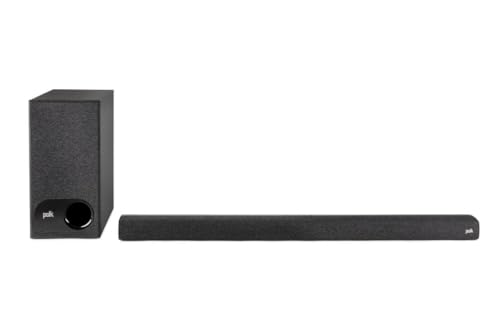
| Spec | Yamaha YAS-209BL | Polk Audio Signa S3 |
|---|---|---|
| Channels | Not published in listing | 2.1 |
| Drivers | Not published in listing | Two 1.25 by 4.4 inch oval mid-range drivers and two 1 inch tweeters |
| Power | Not published in listing | Not published in listing |
| Subwoofer | Wireless subwoofer included; dimensions 7-1/2 x 16-1/2 x 16 inches | 5.25 inch wireless subwoofer included |
| Dolby Atmos and DTS | DTS Virtual:X listed; Dolby Atmos not listed | Dolby Digital 5.1 decoding only; no Atmos or DTS listed |
| HDMI eARC and inputs | HDMI input listed; eARC and number of inputs not published in listing | HDMI ARC, optical, 3.5mm; no eARC listed |
| Wireless and streaming | Wi-Fi, Bluetooth, Spotify Connect; Alexa built-in | Bluetooth, Chromecast built-in, Google Assistant via Google Home |
| Dimensions | Soundbar 36-5/8 x 2-1/2 x 4-1/4 inches; subwoofer 7-1/2 x 16-1/2 x 16 inches | 2 inches tall; full dimensions not published |
| Remote and app | Alexa built-in; remote and dedicated app not specified in listing | Not published in listing; Chromecast setup uses Google Home app |
| Included accessories | Not published in listing | HDMI cable and optical cable |
Sound Quality
The Yamaha YAS-209BL earns a sound quality score of 23 out of 30, while the Polk Audio Signa S3 earns 22 out of 30, so the two are nearly even on paper. Yamaha does not publish its driver arrangement or power output, which makes a driver-level comparison impossible. Polk does publish a two-way driver array with two 1.25 by 4.4 inch oval mid-range drivers and two 1 inch tweeters. That specification suggests a conventional stereo bar with dedicated tweeters, but no power rating is given.
Both companies emphasize clear dialogue as a core strength. Yamaha lists Clear Voice dialogue enhancement, and Polk lists VoiceAdjust dialogue tuning. These features likely help lift speech frequencies above background music and effects, making news and dramas easier to follow. Without frequency response measurements or in-person testing, we cannot say which dialogue mode sounds more natural or which bar plays louder.
Yamaha includes DTS Virtual:X processing, which can create a wider and taller soundstage from a single bar, but that is a surround feature rather than a direct measure of driver quality. Polk does not list any virtual surround mode, instead focusing on a clean 2.1 mix. For music, Yamaha offers Spotify Connect and Wi-Fi streaming, while Polk relies on Chromecast and Bluetooth. Neither bar has published distortion, sensitivity, or amplifier power, so buyers who need detailed acoustic data will be disappointed.
Surround, Atmos and Audio Formats
Neither the Yamaha YAS-209BL nor the Polk Audio Signa S3 supports Dolby Atmos. Yamaha lists DTS Virtual:X for virtual height and surround effects, while Polk lists only Dolby Digital 5.1 decoding with no DTS support. Yamaha's channel count is not published, but its inclusion of a subwoofer and virtual processing suggests a typical 2.1 or similar bar. Polk is explicitly a 2.1 channel system.
DTS Virtual:X can accept a range of input formats and map them to virtual overhead and side channels using psychoacoustic processing. This gives the Yamaha a clear advantage if you want a wider, taller soundstage without rear speakers. Polk's Dolby Digital 5.1 decoding means it can accept a 5.1 bitstream from a TV or source, but it must downmix that to its two channels and subwoofer. There is no virtual surround or height on the Polk.
For physical surround, neither bar includes rear speakers or supports wireless surround add-ons according to the listings. The lack of eARC on both means you cannot pass lossless Dolby TrueHD or DTS-HD Master Audio from a Blu-ray player through the TV. If you need object-based audio like Atmos or DTS:X, you should look at a higher-tier bar. For basic TV broadcasts and streaming from services that use Dolby Digital, both bars will work.
Subwoofer and Bass
Both soundbars include a wireless subwoofer in the box. Yamaha's subwoofer dimensions are 7-1/2 x 16-1/2 x 16 inches, and it is listed with automatic pairing. Polk's subwoofer uses a 5.25 inch driver, but its full cabinet dimensions are not published. Yamaha does not publish the driver size or amplifier power for its subwoofer.
The Yamaha subwoofer cabinet is notably larger at 16.5 inches deep and 16 inches tall, which can provide more internal volume for bass extension. However, without frequency response data or power output, we cannot confirm that it plays deeper or louder than the Polk. Polk's 5.25 inch driver is a common size for compact home theater subwoofers and should add noticeable weight to TV and music. Both systems lack a wired subwoofer output, so you cannot connect a different powered sub.
For most buyers in this price tier, the included wireless subs will handle explosions, kick drums, and low-end atmosphere better than TV speakers. The main difference is physical size: the Yamaha sub takes more floor space, while the Polk sub is likely smaller but not specified. If you have a large room or expect powerful LFE, both may run out of headroom. Published power ratings would help, but neither provides them.
Connectivity and TV Setup
Polk Audio Signa S3 clearly lists HDMI ARC, optical, and 3.5mm auxiliary inputs, with no eARC support. Yamaha YAS-209BL lists an HDMI input, but the listing does not specify whether it supports ARC or eARC, and the number of HDMI inputs is not published. The Yamaha summary mentions simple HDMI or optical setup, but the spec sheet does not confirm an optical port. Both bars are aimed at straightforward TV connections.
For wireless streaming, Yamaha includes Wi-Fi, Bluetooth, and Spotify Connect, while Polk includes Bluetooth and Chromecast built-in. Yamaha's Wi-Fi support means it can join a home network and stream directly from Spotify without a phone as the source. Polk's Chromecast built-in allows casting from many apps and works with Google Home voice control. Both support Bluetooth for simple pairing.
Neither bar supports HDMI eARC, so lossless and object-based formats from a TV's HDMI eARC port are not available. If your TV has only optical output, both should work, though Yamaha's optical port is not explicitly listed. Polk includes both HDMI and optical cables in the box, which reduces setup hassle. Yamaha's included accessories are not published, so you may need to buy a cable separately if your TV connection is not already in place.
Features, Apps and Voice Control
Yamaha YAS-209BL has Alexa built-in, so you can ask for music, control volume, and use smart home commands directly through the soundbar's microphones. Polk Audio Signa S3 has no built-in voice assistant microphone, but it supports Google Assistant through Chromecast built-in when you use a Google Home speaker or the Google Home app. This makes Yamaha the better choice for Alexa households and hands-free control without another device.
For audio features, Yamaha lists Clear Voice and DTS Virtual:X, while Polk lists VoiceAdjust for dialogue. Yamaha's remote control and dedicated app are not specified in the listing, so it is unclear whether you can adjust settings beyond the bar's buttons or voice commands. Polk's remote and dedicated soundbar app are not published either, though Chromecast setup uses the Google Home app. This means neither has a confirmed customizable app experience.
Streaming platforms are another difference. Yamaha's Spotify Connect lets Spotify app users send audio directly over Wi-Fi, while Bluetooth is also available. Polk's Chromecast built-in supports a wider range of casting apps, including Spotify, but it does not have a native Spotify Connect protocol. If you depend on an Alexa-based music ecosystem, Yamaha's integration is more direct. If you use Google Home, Nest devices, and Chromecast, the Polk fits more naturally.
Design and Fit Under a TV
The Yamaha YAS-209BL soundbar measures 36-5/8 inches wide, 2-1/2 inches tall, and 4-1/4 inches deep. The Polk Audio Signa S3 is 2 inches tall, but its full width and depth are not published. The Polk's lower height of 2 inches gives it a slight edge if your TV stand has very little clearance beneath the panel. Yamaha's 2.5 inch height is still low and fits most modern TVs.
Yamaha's width of about 36.6 inches pairs well with TVs 43 inches and larger, but the listing does not specify recommended TV sizes. Polk's width is unknown, so you cannot directly compare footprint. Both bars are designed as low-profile units that sit in front of a TV without blocking the screen or IR remote sensor, assuming the TV is elevated. If your TV sits flush on a table, the Polk's shorter height may be safer.
Subwoofer placement is another design consideration. Yamaha's sub is 7-1/2 x 16-1/2 x 16 inches, which is relatively large and may need dedicated floor space. Polk's sub has a 5.25 inch driver but no published cabinet dimensions, which suggests it may be smaller, but that is not confirmed. Both subwoofers are wireless, so they only need power outlets and can be placed away from the bar. If you have a tight entertainment console, check the actual Polk dimensions before purchase.
Who Should Buy It
Buy the Yamaha YAS-209BL if you want an easy lower mid-range soundbar with a wireless subwoofer, DTS Virtual:X for virtual surround, Clear Voice dialogue enhancement, and Alexa built-in. It is suited to users who prefer Alexa for voice control and want Spotify Connect streaming over Wi-Fi. The bar does not include rear speakers and does not support Dolby Atmos, so it is not for an advanced home theater setup.
Buy the Polk Audio Signa S3 if you want clearer television dialogue in a simple 2.1 system with Chromecast built-in and Bluetooth. Its VoiceAdjust feature is tailored to speech, and the included wireless 5.25 inch subwoofer adds bass without taking up too much space. It suits Google Home households and buyers who want a very low profile 2 inch tall bar.
Both products sit in the lower mid-range category and score within four points overall, so neither is dramatically better for all users. Yamaha's strengths are virtual surround, built-in voice assistant, and Wi-Fi streaming. Polk's strengths are a lower height, included cables, Chromecast compatibility, and a published driver arrangement. Choose based on which ecosystem and audio priorities matter more.
The Deciding Question
The deciding question is whether you value built-in Alexa voice control and DTS Virtual:X more than a slightly lower profile with Chromecast and Google Assistant support. If you want to say voice commands directly to the soundbar and enjoy virtual height effects, the Yamaha YAS-209BL is the stronger option. If you primarily want clear dialogue and use Google Home devices, the Polk Audio Signa S3 is more aligned.
Another consideration is what you connect to the bar. Both lack eARC and Dolby Atmos, so neither is future proof for lossless object-based audio. Polk lists optical and 3.5mm inputs, while Yamaha's optical support is not explicit in the specs, which may matter if your TV is older. If HDMI ARC is your only connection, both should work, but Polk explicitly confirms ARC.
Finally, think about the space under your TV. Polk is 2 inches tall versus Yamaha's 2.5 inches, a half inch difference that can matter with slim TV stands. For most buyers, the choice reduces to Alexa versus Google Assistant, and virtual surround versus a clean 2.1 focus. There is no wrong answer for basic TV and music upgrading.
Who Should Buy Which
Choose the Yamaha YAS-209BL if you are in the Alexa ecosystem and want built-in voice control, DTS Virtual:X for a wider soundstage, and Spotify Connect. Its wireless subwoofer pairs automatically, and Clear Voice helps make dialogue easier to understand. The 36.6 inch bar and 2.5 inch height suit medium and large TVs with standard clearance.
Choose the Polk Audio Signa S3 if you want a compact 2 inch tall bar with VoiceAdjust dialogue tuning, Chromecast built-in, and included HDMI and optical cables. It is a good match for Google Home users who do not need virtual surround or a built-in microphone. The wireless 5.25 inch subwoofer adds enough low end for small and medium rooms.
If you need Dolby Atmos, DTS:X, HDMI eARC, discrete rear speakers, or published amplifier power, both bars fall short and you should look at higher-end models. For everyday TV, streaming, and music in a bedroom or living room, either can be a meaningful upgrade from built-in TV speakers. Match the platform and physical clearance to your living room.
Yamaha YAS-209BL
Pros
- Wireless subwoofer included with automatic pairing
- DTS Virtual:X for virtual surround
- Clear Voice dialogue enhancement
- Alexa built-in for voice control
- Wi-Fi, Bluetooth, and Spotify Connect streaming
- Slim 2-1/2 inch height fits under many TVs
Cons
- No Dolby Atmos support
- eARC and HDMI input count not published
- Driver and power specifications not published
- Physical remote and dedicated app not specified
- No wired subwoofer output listed
Polk Audio Signa S3
Pros
- Clear dialogue focus with VoiceAdjust
- Wireless 5.25 inch subwoofer included
- Chromecast built in and Bluetooth streaming
- Low profile 2 inch height fits under many TVs
- HDMI and optical cables included
Cons
- No Dolby Atmos or DTS support
- No HDMI eARC for lossless audio
- No published power output or full dimensions
- 2.1 channels only, no discrete surrounds
- No built-in voice assistant microphone
Who Should Buy Each
Yamaha YAS-209BL
- TV owners who want clearer dialogue and a compact bar with included sub
- Households that already use Alexa for voice control and music
- Renters or small rooms where wireless sub placement is helpful
- Buyers upgrading from TV speakers with a simple HDMI or optical connection
Polk Audio Signa S3
- Apartment and small room users who want a clear upgrade over TV speakers
- Buyers who value dialogue clarity and use VoiceAdjust
- Chromecast and Google Home households
- People who want HDMI and optical cables included
Quick Decision Guide
| If you want built-in Alexa voice control | Choose Yamaha YAS-209BL |
| If you use Google Home devices and Chromecast casting | Choose Polk Audio Signa S3 |
| If you want DTS Virtual:X virtual surround | Choose Yamaha YAS-209BL |
| If you need the lowest 2 inch profile under a TV | Choose Polk Audio Signa S3 |
| If you want included HDMI and optical cables | Choose Polk Audio Signa S3 |
FAQ
About This Comparison
Daniel Brooks
Daniel Brooks edits the buying guides and how-to articles at Mandrillis. He works from manufacturer manuals, published specifications and common owner questions to explain music and audio gear in plain language, from turntables and headphones to digital pianos and electronic drums.
Read our full research methodology.
We may earn a commission at no extra cost to you.