Martin D-18 Satin vs Cort Luxe II
Quick Verdict
The Martin D-18 Satin is the stronger choice for players who want a premium all solid American dreadnought with traditional tone, a known 25.4 inch scale, and a vintage sunburst finish. Its GE Modified Low Oval neck and dreadnought projection suit flatpicking and strumming. The Cort Luxe II is the better choice for players who need built-in electronics, prefer a concert body, and value distinctive Art Deco looks. It includes a Fishman Flex Blend System, solid Adirondack spruce top, and flamed blackwood back and sides. However, the Cort omits scale length, nut width, and neck wood, making fit harder to predict. Choose Martin for acoustic tradition, Cort for stage-ready versatility.

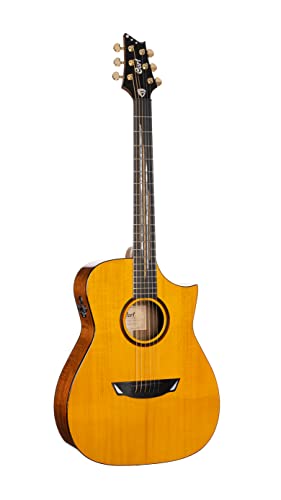
| Spec | Martin D-18 Satin | Cort Luxe II |
|---|---|---|
| Body shape | Dreadnought | Concert |
| Top | Solid spruce | Solid Adirondack Spruce |
| Back and sides | Solid mahogany | Flamed Blackwood |
| Neck and fingerboard | GE Modified Low Oval profile, high-performance taper, thinner fingerboard with beveled edges; wood not published in listing | Fingerboard: Ebony; neck wood: Not published in listing |
| Scale length | 25.4 inches | Not published in listing |
| Nut width | Not published in listing | Not published in listing |
| Electronics | Not published in listing | Fishman Flex Blend System |
| Tuners | Not published in listing | Not published in listing |
| Finish | Satin with 1935 Sunburst top | Natural Gloss |
| Included accessories | Not published in listing | Not published in listing |
Body, Neck and Playability
The Martin D-18 Satin uses a classic dreadnought body, which delivers broad projection and a big acoustic voice. The Cort Luxe II uses a concert body, a smaller shape that is not explicitly dimensioned in the listing. Martin lists the dreadnought as potentially uncomfortable for smaller players, while the Cort's concert body may suit seated players more easily. Both listings omit overall body dimensions, so direct size comparison relies on body shape descriptions.
Martin publishes its neck details as a GE Modified Low Oval profile with a high-performance taper and a thinner fingerboard with beveled edges. The scale length is 25.4 inches, a standard Martin scale that supports sustain and string tension. Cort publishes an ebony fingerboard but does not list the neck wood, scale length, or nut width. The ebony fingerboard is a premium appointment, but the missing dimensions make it hard to predict the feel.
In the supplied playability scores, Martin earns 27 out of 30 and Cort earns 22 out of 30. That gap reflects the Martin's more complete neck spec and known scale, while the Cort's unknown scale and nut width reduce confidence. Players who need predictable fret spacing and neck shape have better published data on the Martin. The Cort's ebony fingerboard is smooth on paper, but the lack of neck wood and dimensions is a real gap.
Tone and Projection
The Martin D-18 Satin pairs a solid spruce top with solid mahogany back and sides, an all solid tonewood combination. Its dreadnought body provides strong projection, and the listing highlights a focused midrange. The 25.4 inch scale length contributes to sustain and note clarity. This is the traditional Martin acoustic voice, suited to strumming and flatpicking.
The Cort Luxe II uses a solid Adirondack spruce top, which the listing describes as clear and responsive. The back and sides are flamed blackwood, described as adding balanced sound and visual appeal. The concert body is smaller than a dreadnought, so its projection is likely more controlled, though the listing does not publish sound pressure or volume data. The ebony fingerboard and bridge may support a refined tone, but the listing does not attribute specific tonal changes to them.
Tone scores from the supplied breakdown show Martin at 24 out of 25 and Cort at 20 out of 25. Martin's all solid spruce and mahogany with dreadnought projection earns a higher tone score. The Cort's Adirondack top and flamed blackwood offer a clear, balanced character, but the smaller body and unspecified back and side solidity lower its score on paper. Both should be versatile acoustics, but Martin has the traditional dreadnought power edge.
Hardware and Electronics
The listing for the Martin D-18 Satin does not publish any electronics, pickups, or preamp. Tuners are also not published. The lack of electronics means the Martin is an acoustic only instrument unless an aftermarket pickup is added. The hardware score in the breakdown is 7 out of 10, reflecting the absence of published electronic features.
The Cort Luxe II includes a Fishman Flex Blend System, which offers flexible amplified tones according to the listing. It also lists Graph Tech Black TUSQ nut and saddle, which improve tuning stability and sustain. The tuners are not published in the listing, and no included case or bag is listed. The hardware score is also 7 out of 10, but the built in electronics give it a clear stage advantage.
Comparing the two, the Cort is the only guitar with built-in electronics, making it ready for live performance or recording direct. The Martin has no published electronics, so amplification requires external equipment. Both have unknown tuners, which is a shared gap. For players who plug in regularly, the Cort Luxe II is the more practical choice.
Build Quality and Finish
The Martin D-18 Satin is built with all solid spruce and mahogany, and the listing mentions Standard Series handmade build details. The finish is a satin with a 1935 Sunburst top, a vintage look that sets it apart. The build and materials score is 14 out of 15, reflecting premium tonewoods and handmade construction.
The Cort Luxe II has a solid Adirondack spruce top and flamed blackwood back and sides, with an ebony fingerboard and bridge. It includes Graph Tech Black TUSQ nut and saddle, and the finish is natural gloss with Art Deco styling. The build score is 12 out of 15, slightly lower than the Martin. The flamed blackwood and Art Deco details give the Cort a distinctive upscale appearance.
Both guitars have strong build credentials, but the Martin's all solid construction and handmade Standard Series details justify its higher build score. The Cort's use of flamed blackwood and premium appointments is impressive, but the listing does not state whether the back and sides are solid. Finish choices differ sharply: Martin offers satin sunburst, while Cort offers natural gloss.
Setup Out of the Box
Neither listing publishes factory setup measurements such as action height, relief, or string gauge. The Martin D-18 Satin does not list an included case or bag, and neither does the Cort Luxe II. That means out of box protection from shipping is not confirmed for either guitar.
Martin provides some setup relevant data with its known 25.4 inch scale length and GE Modified Low Oval neck profile, but the nut width is not published. Cort omits scale length, nut width, and neck wood, making setup prediction even harder. The playability scores reflect some of this uncertainty, with Martin at 27 and Cort at 22 out of 30.
Based on published specs, neither guitar can be described as playable out of the box without in-person inspection. Buyers should plan for a professional setup to match personal preferences. The Martin's more complete neck spec offers a better starting point for predicting feel, while the Cort's missing dimensions require verification before purchase.
Daily Use and Practice
The Martin D-18 Satin is a large dreadnought, and its cons note it may be uncomfortable for smaller players during seated practice. The known 25.4 inch scale length provides a familiar feel for standard tuning and string tension. Without a case included, daily transport requires a separate purchase.
The Cort Luxe II has a concert body, which is smaller than a dreadnought and likely more comfortable for many players, though dimensions are not published. It includes an ebony fingerboard, but the unknown scale length means fret spacing cannot be confirmed. The built-in Fishman system allows amplified practice or performance without modifying the guitar.
For daily use, the Martin is an all acoustic practice instrument with traditional dreadnought ergonomics. The Cort adds electronics and a smaller body, but its missing scale length is a practical gap for players who like to calculate string tension. Both listings omit included accessories, so a case or gig bag must be bought separately.
Versatility and Styles
The Martin D-18 Satin's dreadnought body and solid spruce with mahogany make it well suited to strumming, flatpicking, bluegrass, and singer songwriter material. The focused midrange and projection support rhythm playing and lead lines. Its versatility score is 8 out of 10.
The Cort Luxe II's concert body and Adirondack spruce top respond to fingerstyle, light strumming, and amplified performance. The Fishman Flex Blend System allows tone shaping for stage or studio. Its versatility score is also 8 out of 10, matching the Martin on paper despite different strengths.
Both guitars earn equal versatility scores, but they serve different needs. The Martin is a pure acoustic dreadnought for traditional American styles. The Cort is a stage ready concert guitar with electronics and visual flair. If you need one guitar for both acoustic and amplified settings, the Cort has the edge, while the Martin is the stronger choice for unplugged tradition.
The Deciding Question
The key difference is not just brand or price, but body style and electronics. The Martin D-18 Satin offers all solid construction, a known scale length, and a vintage sunburst finish with no built in electronics. The Cort Luxe II offers a concert body, solid Adirondack top, flamed blackwood back and sides, and Fishman electronics, but omits several key measurements.
Decide whether you need built in amplification and a smaller body, or whether you want the traditional all solid dreadnought voice and published scale length. The Martin's overall score is 88 out of 100, higher than the Cort's 76 out of 100. That higher score comes from stronger tone, build, and playability ratings, though both guitars have merit.
The deciding question is therefore about missing information and amplification. If you can verify the Cort's scale length, nut width, and neck wood, and you need electronics, it is the practical choice. If you prefer the security of known scale and all solid tonewoods, the Martin is the clearer buy despite its lack of electronics.
Who Should Buy Which
Buy the Martin D-18 Satin if you want a premium all solid American dreadnought with solid spruce and mahogany, a 25.4 inch scale length, GE Modified Low Oval neck, and satin 1935 Sunburst finish. It suits players focused on traditional Martin tone and acoustic projection.
Buy the Cort Luxe II if you want a visually distinctive concert guitar with a solid Adirondack spruce top, flamed blackwood back and sides, ebony fingerboard, Fishman Flex Blend electronics, and Art Deco styling. It suits players who need built in amplification and prefer a smaller body.
If you remain undecided, prioritize electronics and body comfort. The Martin is acoustic only and large; the Cort is stage ready but has unpublished neck dimensions. Contact the seller or manufacturer to confirm the Cort's missing specs before purchase. Neither guitar is a poor choice, but they serve different players.
Martin D-18 Satin
Pros
- All solid spruce and mahogany construction
- Dreadnought projection with focused midrange
- GE Modified Low Oval neck profile
- 25.4 inch scale length for sustain
- Vintage 1935 Sunburst satin finish
- Standard Series handmade build details
Cons
- Nut width and string spacing not published
- Electronics and tuners not specified
- No included case or bag listed
- Large dreadnought may be uncomfortable for smaller players
- Premium price tier
Cort Luxe II
Pros
- Solid Adirondack spruce top delivers clear, responsive tone
- Flamed blackwood back and sides add visual appeal and balanced sound
- Ebony fingerboard and bridge provide a smooth, refined playing surface
- Fishman Flex Blend system offers flexible amplified tones
- Graph Tech Black TUSQ nut and saddle improve tuning stability and sustain
- Art Deco styling gives the guitar a distinctive, upscale look
Cons
- Scale length is not published in the listing
- Nut width is not published in the listing
- Neck wood is not published in the listing
- Tuner brand and ratio are not published in the listing
- Included accessories such as a case or gig bag are not listed
Who Should Buy Each
Martin D-18 Satin
- Intermediate to advanced flatpickers and strummers
- Singer songwriters who want a full size acoustic voice
- Players drawn to vintage sunburst aesthetics
- Those seeking an all solid Standard Series Martin
Cort Luxe II
- Fingerstyle players who like a concert body and responsive solid top
- Performing musicians who need a reliable stage pickup system
- Buyers who want premium tonewoods and an upscale Art Deco look
- Players who prefer ebony fingerboard and bridge for smooth playability
Quick Decision Guide
| If you need built-in electronics for live performance | Choose Cort Luxe II |
| If you want an all solid American dreadnought with a known scale length | Choose Martin D-18 Satin |
| If you prefer a concert body over a large dreadnought | Choose Cort Luxe II |
| If you want a vintage sunburst satin finish and handmade Standard Series details | Choose Martin D-18 Satin |
| If you value clear, balanced amplified tones with a solid Adirondack top | Choose Cort Luxe II |
FAQ
About This Comparison
Daniel Brooks
Daniel Brooks edits the buying guides and how-to articles at Mandrillis. He works from manufacturer manuals, published specifications and common owner questions to explain music and audio gear in plain language, from turntables and headphones to digital pianos and electronic drums.
Read our full research methodology.
We may earn a commission at no extra cost to you.