Laney Lionheart Foundry Head vs Vox AC10C1
Quick Verdict
The Laney Lionheart Foundry Head is the better choice for players who need power scaling down to under 1 watt, two channels with bright and dark voicing, built-in reverb plus tremolo or chorus, and 1x12 or 4x12 cabinet IR emulation for direct recording. The Vox AC10C1 is the better choice for traditionalists who want a genuine all-tube 10-watt combo with a Celestion VX10 speaker and classic Top Boost tone. Choose the Laney for flexibility, silent practice, and recording convenience. Choose the Vox for simple controls, tube touch response, and small stage or studio use. Both score 82 overall, but the Laney favors modern workflow, while the Vox favors classic tube amp purity.

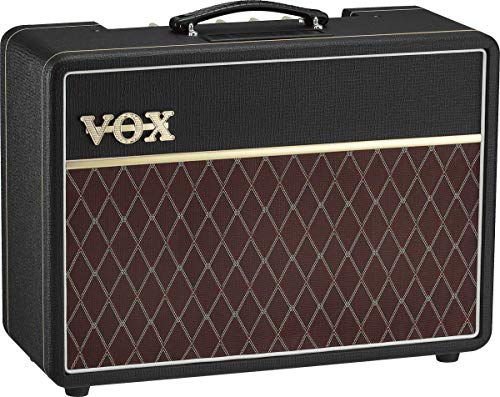
| Spec | Laney Lionheart Foundry Head | Vox AC10C1 |
|---|---|---|
| Power output | 120W max, switchable to under 1 watt | 10 watts |
| Speaker | Not published in listing (head with 1x12 or 4x12 IR emulation) | 1x10 inch Celestion VX10 |
| Amp models or channels | Two channels (Channel 1 and Channel 2) with Bright and Bright/Dark toggle switches | 1 channel with Top Boost tone circuit |
| Effects | Reverb with individual control; Tremolo or Chorus switch with Rate and Depth controls | Reverb |
| Inputs and outputs | Not published in listing | Extension and external speaker outputs; bypassable effect loop |
| Headphone and line out | Not published in listing | Not published in listing |
| Bluetooth and app | Not published in listing | Not published in listing |
| Weight | Not published in listing | Not published in listing |
| Dimensions | Not published in listing | Not published in listing |
| Included accessories | Not published in listing | Not published in listing |
Amp Models and Tone
The Laney Lionheart Foundry Head is built around two channels, Channel 1 and Channel 2. Channel 1 includes a Bright switch, while Channel 2 adds both Bright and Dark toggle options. This gives players four basic voicing combinations before touching the main tone controls. The listing does not mention digital amp models or tube circuitry, so the voicing is delivered through the amp's own analog front end.
The Vox AC10C1 offers a single channel with the traditional Top Boost tone circuit. The listing specifies all-tube operation using EL84 power tubes and 12AX7 preamp tubes. This design is closely associated with Vox's classic chime and edge-of-breakup response. There are no channel switching or bright/dark voicing toggles on the Vox, which keeps the control set very direct.
In the supplied scoring, the Vox earns 28 out of 30 for tone and amp models, while the Laney earns 27. The Vox's higher tone score aligns with its focused all-tube Top Boost reputation, while the Laney trades some tonal purity for channel and voicing flexibility. The Laney's two-channel design may suit players who need quick changes between a brighter rhythm sound and a darker lead sound, but the Vox is the more specialized choice for classic tube amp tone.
Effects and Features
The Laney includes built-in reverb with an individual control, plus a switchable tremolo or chorus effect with dedicated Rate and Depth controls. This means players can use reverb alongside either tremolo or chorus, but not both modulation types at once. The listing does not mention delay, pitch, or other digital effects. The effects score is 16 out of 20.
The Vox AC10C1 provides a built-in reverb only, with no tremolo, chorus, or other modulation listed. Its effects score is also 16 out of 20, equal to the Laney despite the fewer effect types. This reflects the Vox's simpler feature set but still useful reverb. The Vox does include a bypassable effects loop, which the Laney listing does not mention.
On paper, the Laney has more onboard effect variety with reverb plus tremolo or chorus. The Vox counters with an external effects loop that allows players to place their own pedals after the preamp. The Laney listing does not state whether an effects loop is present, so buyers who rely on pedal chains should verify that detail. For a player who wants modulation without extra pedals, the Laney has the advantage.
Power, Speaker and Volume
The Laney publishes a maximum power output of 120 watts and a switchable setting below 1 watt. This wide range suggests the head can drive larger cabinets at stage volume and then scale down for quiet practice. The listing does not state the type of power amp, so tube or solid-state operation is unclear from the provided data. The power score is 14 out of 15.
The Vox AC10C1 is rated at 10 watts through a 1x10 inch Celestion VX10 speaker. The all-tube EL84 power section delivers modest volume that is often suitable for home and studio. Its power score is 11 out of 15, reflecting the lower total wattage compared with the Laney. The Vox's single 10-inch speaker is specified, while the Laney is a head with no included speaker cabinet.
The Laney's built-in IR emulation supports 1x12 or 4x12 cabinet sounds, which is useful for direct recording without a physical cabinet. The Vox relies on its internal Celestion speaker for its voice, though it also lists extension and external speaker outputs. Volume behavior will differ significantly: the Vox's lower wattage means it reaches its natural breakup at lower volume levels than a 120-watt amp, while the Laney's power scaling also permits low-wattage operation. Players who need very quiet practice may prefer the Laney's sub-1-watt setting, while those who want a real speaker moving air may prefer the Vox combo.
Build and Portability
The Laney is a head, so it does not include a speaker cabinet. The listing does not publish its weight or dimensions, making portability difficult to assess from the provided data. The build score is 8 out of 10. A head can be convenient for use with different cabinets, but it requires an external cab or IR monitoring.
The Vox AC10C1 is a combo with an included Celestion VX10 speaker. The listing also omits weight and dimensions, so exact portability is not specified. The build score is also 8 out of 10. Combos generally offer an all-in-one grab-and-go package, but without published weight, direct comparison on carrying ease is not possible.
From the specifications, the Vox is physically more self-contained because it has a speaker and power amp in one enclosure. The Laney requires a separate speaker cabinet or headphones or direct monitoring, depending on outputs that are not fully listed. The absence of published dimensions for both models means buyers should check the manufacturer's site before assuming they will fit a car trunk or small studio corner. Build quality cannot be judged from listing data alone.
Connectivity and Apps
The Laney listing does not publish inputs and outputs, headphone and line out, Bluetooth, or app support. This is a significant gap in the supplied facts. The connectivity score is 8 out of 15. The presence of IR emulation suggests some form of direct output is likely, but the listing does not confirm it.
The Vox AC10C1 lists extension and external speaker outputs and a bypassable effects loop. No headphone or line out is published, and no Bluetooth or app support is listed. Its connectivity score is 9 out of 15. The Vox therefore has clearer documented speaker connectivity but lacks silent practice outputs as listed.
Neither amp shows Bluetooth or app control in the listing. The Vox's effect loop is a documented connection for external pedals, while the Laney's loop presence is unknown. For players who need direct recording, the Laney's IR emulation is promising but undercut by the missing output documentation. The Vox seems more oriented toward traditional speaker and pedal connectivity.
Setup and Daily Use
The Laney's controls appear straightforward, with two channel switches, Bright and Dark toggles, and dedicated reverb and modulation controls. Day-to-day use would involve selecting a channel, setting tone, and adjusting effects. The power scaling switch lets a player move between high headroom and low-wattage practice without external attenuators. However, because the listing does not mention a footswitch, channel and effect changes may require the front panel.
The Vox AC10C1 has a simple traditional panel: Gain, Bass, Treble, Reverb, and Volume. This makes setup very quick for players who want classic amp behavior. The bypassable effects loop adds flexibility for inserting delays, reverbs, or loopers. Without a headphone out listed, daily silent practice is not directly supported.
In daily use, the Vox likely wins on simplicity because it is a single channel combo with no deep menus or IR selection. The Laney may appeal to players who want more voicing options and built-in modulation without adding pedals. Both appear to be easy to operate, but the Vox's all-tube design may require occasional tube maintenance over time, while the Laney's tube status is not stated.
Home Practice Versus Stage
For home practice, the Laney's sub-1-watt setting and built-in cabinet IR emulation are strong features. Players can record direct or practice quietly through headphones or studio monitors if the appropriate outputs exist. The Vox at 10 watts may still be too loud for late-night bedroom practice in some living situations, though its tube tone can be enjoyed at moderate volumes.
For stage use, the Laney's 120-watt maximum output can drive large cabinets, and the bright/dark toggles give on-the-fly tone shaping. The Vox AC10C1 is better suited to small stages, studio, or mic'd situations due to its 10-watt output. The Vox's external speaker output allows connecting an extension cabinet for more spread, but total power remains 10 watts.
The Vox has an advantage for coffeehouse or small club gigs where cranked tube tone is desirable and a PA system is available. The Laney can cover larger rooms without a PA, assuming a suitable cabinet is used. Both can work for recording, but the Laney's IR emulation may simplify direct recording while the Vox requires a microphone or load box for silent capture.
The Deciding Question
The central choice is between a flexible amp head with power scaling and built-in modulation or a straightforward all-tube combo with classic Vox tone. The Laney provides more power range, two channels, and more effects. The Vox provides a specified tube design, a real Celestion speaker, and a simpler control set.
The deciding question may be: do you want one amp that covers high headroom, low wattage, and direct recording with cab emulation, or do you want a traditional low-watt tube combo that sounds great in a room and accepts pedals well? The answer depends on the player's workflow.
If you need silent practice through headphones or direct recording without a microphone, the Laney's IR emulation is attractive, but you must confirm the output details. If you prefer the tactile response of tubes and a real speaker moving air, the Vox is the more direct path.
Who Should Buy Which
Choose the Laney Lionheart Foundry Head if you want a compact head with 120 watts, power scaling below 1 watt, two channels with bright and dark voicing, and built-in reverb plus tremolo or chorus. It suits players who use different cabinets or want direct recording with 1x12 or 4x12 emulation. It is also for those who need a quiet practice solution without a dedicated tube amp.
Choose the Vox AC10C1 if you want a genuine all-tube 10-watt combo with a Celestion VX10 speaker and the classic Top Boost sound. It fits home, studio, and small stage use for blues, rock, and classic rock. It is ideal for players who prefer simple controls, built-in reverb, and a bypassable effects loop.
Both models score 82 overall, but their strengths split along practical lines. The Laney is more versatile for direct and low-volume work, while the Vox delivers a purist tube combo experience. Buyers should verify missing connectivity and physical specs before ordering.
Laney Lionheart Foundry Head
Pros
- 120W with power scaling below 1 watt
- Built-in IR emulation for 1x12 or 4x12 cabinets
- Two channels with bright/dark voicing toggles
- Reverb plus tremolo or chorus with dedicated controls
- Mid-range price for a versatile head
Cons
- Listing omits key connectivity specs like direct out and headphone
- Single speaker emulation switch limited to two IR options
- No footswitch or effects loop listed
- Weight and dimensions not published, making portability unclear
Vox AC10C1
Pros
- All tube 10 watt design with EL84 and 12AX7 tubes
- Celestion VX10 speaker for clear projection
- Classic Vox Top Boost tone circuit with simple controls
- Built in reverb and bypassable effect loop
- Compact and portable with extension speaker options
- Ideal for blues, rock, and classic rock at manageable volume
Cons
- No headphone or line out listed
- No built in amp models or digital effects beyond reverb
- Single channel limits on the fly switching
- Listing does not publish weight and dimensions
- No Bluetooth or app support listed
Who Should Buy Each
Laney Lionheart Foundry Head
- Players who already own a speaker cabinet or want to use IR emulation for recording
- Home and project studio users who need flexible wattage and core effects
- Guitarists who prefer analog-style two-channel tone shaping over deep menu diving
- Musicians looking for a mid-range head with built-in reverb and modulation without extra pedals
Vox AC10C1
- Guitarists seeking an all tube practice and recording amp
- Fans of classic Vox Top Boost tone for blues and rock
- Players who want a simple control set with reverb and an effects loop
- Anyone wanting a portable tube combo with an option to add an extension cabinet
Quick Decision Guide
| If you need silent practice or direct recording with cabinet emulation | Choose Laney Lionheart Foundry Head |
| If you want an all-tube combo with classic Vox Top Boost tone | Choose Vox AC10C1 |
| If you need high wattage for large stages or quiet sub-1-watt home use | Choose Laney Lionheart Foundry Head |
| If you prefer a simple single channel amp with built-in reverb and an effects loop | Choose Vox AC10C1 |
| If you want onboard tremolo or chorus plus reverb without extra pedals | Choose Laney Lionheart Foundry Head |
FAQ
About This Comparison
Daniel Brooks
Daniel Brooks edits the buying guides and how-to articles at Mandrillis. He works from manufacturer manuals, published specifications and common owner questions to explain music and audio gear in plain language, from turntables and headphones to digital pianos and electronic drums.
Read our full research methodology.
We may earn a commission at no extra cost to you.