Kawai ES920 vs Roland FP-30X
Quick Verdict
For serious pianists seeking the most realistic portable action and the strongest onboard speakers, the Kawai ES920 is the better buy. Its RHIII action with let-off, triple sensors and counterweights scores 29/30, and its 2 x 20 watt speakers outperforms the Roland's 2 x 11 watt system. The Roland FP-30X fights back with a lighter 32.6 pound body, 56 tones versus 38, quarter-inch line outputs and dual headphone jacks. Both include Bluetooth audio and MIDI, USB audio and 256-note polyphony. Choose the Kawai if key action and sound volume are everything and you can accept 37.5 pounds. Choose the Roland if you want a more portable, feature-rich slab that still has a highly realistic PHA-4 Standard action.
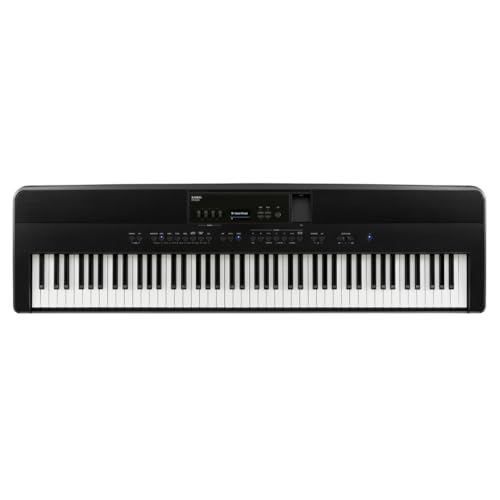

| Spec | Kawai ES920 | Roland FP-30X |
|---|---|---|
| Key Action | Responsive Hammer III with let-off and counterweights | PHA-4 Standard with escapement and Ivory Feel |
| Sound Engine | Harmonic Imaging XL with 88-key sampling | Roland SuperNATURAL Piano |
| Voices | 38 | 56 |
| Polyphony | 256 notes | 256 notes |
| Speakers | 2 x 20 W | 2 x 11 W |
| Bluetooth | Audio and MIDI | Audio and MIDI |
| USB | USB audio and MIDI | USB audio and MIDI (Type B) |
| Pedals | F-10H pedal included; GFP-3 triple pedal optional | DP-2 sustain switch included; KPD-70 triple pedal optional |
| Weight | 37.5 lb (17 kg) | 32.6 lb (14.8 kg) |
| Form Factor | Portable with OLED display | Portable slab |
Key Action
The Kawai ES920 uses the Responsive Hammer III action with let-off, triple sensors and counterweights. The listing states this RHIII action is console-grade, and the breakdown gives it 29 out of 30 points for key action. The let-off simulates the subtle resistance felt when a grand piano hammer releases, and the counterweights help balance the keys for faster repetition.
The Roland FP-30X uses the PHA-4 Standard action with escapement and Ivory Feel. The breakdown gives this action 28 out of 30 points. Escapement provides a similar let-off sensation, and the Ivory Feel surface is designed to absorb moisture and improve grip. The Roland listing does not state whether the PHA-4 Standard uses triple sensors or counterweights, so those aspects cannot be compared directly.
In practical terms, the Kawai has a one point advantage in the action category. The Kawai RHIII is described as console-grade and includes both let-off and counterweights, while the Roland PHA-4 Standard offers escapement and Ivory Feel at a lower weight. Players who prioritize maximum hammer realism may prefer the Kawai, though both actions are highly scored.
Piano Sound and Speakers
The Kawai ES920 uses the Harmonic Imaging XL sound engine with 88-key sampling. Its pros note that the SK-EX and EX concert grands are sampled across all 88 keys, which means each key has its own recorded sample rather than stretched samples. The piano sound category gives the ES920 24 out of 25 points. It also includes 38 voices and 256-note polyphony.
The Roland FP-30X uses the SuperNATURAL Piano engine and includes 56 tones with 256-note polyphony. The piano sound category gives the FP-30X 22 out of 25 points. The Roland cons say the SuperNATURAL grand can sound bright next to the Kawai ES120, but the listing does not compare its tone directly to the ES920 engine. The higher tone count gives the Roland more non-piano sounds for layering or practice.
For speakers, the Kawai has two 20 watt speakers, and its pros describe these as the most powerful in a portable at this price. The Roland has two 11 watt speakers. The Kawai's higher wattage suggests greater volume capability, but neither listing provides frequency response or cabinet design details. If speaker volume and presence are important, the Kawai holds a clear advantage on paper.
Features and Modes
Both models score 14 out of 15 in the features category. The Kawai includes 38 voices, an OLED display, Bluetooth audio and MIDI, and USB audio and MIDI. The OLED display makes navigation and voice selection easier than a small LED or button-based system, though the listing does not detail all mode options.
The Roland includes 56 tones, Bluetooth audio and MIDI, and USB audio and MIDI via Type B. The Roland pros also list quarter-inch line outputs and two headphone jacks, which are not mentioned in the Kawai's provided specs. The Roland listing does not state whether it has an OLED or other display, so display comparison is limited to the Kawai's OLED.
For pedals, the Kawai includes an F-10H pedal and offers the GFP-3 triple pedal as an option. The Roland includes a DP-2 sustain switch and offers the KPD-70 triple pedal as an option. The Kawai's included F-10H is likely a better pedal than the basic DP-2 switch, but the Roland's optional KPD-70 is a common upgrade path. Both support triple pedal units for full damper, soft and sostenuto functions.
Build, Design and Portability
The Kawai ES920 weighs 37.5 pounds or 17 kilograms and is described as a portable instrument with an OLED display. Its build and portability score is 8 out of 10. The cons note that it is heavy at 37.5 pounds and has plain, utilitarian styling. The weight is substantial for a portable slab, which may matter for frequent transport.
The Roland FP-30X weighs 32.6 pounds or 14.8 kilograms and is described as a portable slab. Its build and portability score is 9 out of 10, one point higher than the Kawai. The Roland cons do mention it is heavier than the slim Casio and Yamaha portables, but it is still about 4.9 pounds lighter than the Kawai. The Roland listing does not state specific design or finish details beyond the slab form factor.
Both are portable slabs without attached stands, and neither listing states whether a music rest or carrying case is included. The Kawai's heavier weight and plainer styling are its main drawbacks here, while the Roland is lighter and scores better on portability. For home use the weight may not matter, but for gigging or moving between rooms the Roland has a practical edge.
Connectivity
Both the Kawai ES920 and Roland FP-30X score 10 out of 10 for connectivity. The Kawai includes Bluetooth audio and MIDI, plus USB audio and MIDI. The Bluetooth audio input lets you stream music from a phone or tablet through the piano speakers, while Bluetooth MIDI supports wireless connection to apps and computers.
The Roland also includes Bluetooth audio and MIDI, plus USB audio and MIDI with a Type B connector. In addition, the Roland pros list quarter-inch line outputs and two headphone jacks. The Kawai listing does not state whether it has quarter-inch line outputs or how many headphone jacks it has, so those specific connections cannot be compared directly.
The quarter-inch line outputs on the Roland are useful for connecting to a mixer, PA system or audio interface without using the headphone jack. The Kawai's USB audio may cover recording needs, but for live stage use the Roland's dedicated line outs offer a simpler cable path. Both models have full wireless and USB audio, making them equally modern in core connectivity.
Setup and Accessories
Setup for both models is straightforward because they are portable slabs. The Kawai ES920 weighs 37.5 pounds, so lifting it onto a stand may require more effort, while the Roland FP-30X weighs 32.6 pounds and is easier to handle. Neither listing describes an included stand, bench or carrying case, so those accessories must be purchased separately unless otherwise noted.
The Kawai includes the F-10H pedal, and a GFP-3 triple pedal is optional. The Roland includes the DP-2 sustain switch, and a KPD-70 triple pedal is optional. The DP-2 is described as a basic switch in the Roland cons, so users who want half-damper or more realistic pedal response may want the optional triple pedal or a separate aftermarket pedal.
Both use standard home piano setups: a stand, a bench, a pedal and headphones. The Kawai's OLED display can simplify initial settings, while the Roland's dual headphone jacks are convenient for teacher and student during silent practice. The listings do not state whether a music rest is included with either model, so that should be confirmed before purchase.
Daily Use
In daily practice, the Kawai ES920 offers a console-like hammer action and strong 20 watt speakers, so it can fill a room without external amplification. The Bluetooth audio input lets you play along with recordings, and USB audio makes it easy to record into a computer or mobile device. The OLED display reduces menu guesswork when changing sounds or settings.
The Roland FP-30X is lighter and has two headphone jacks, which is useful for late-night practice or lessons. Its 56 tones provide more variety than the Kawai's 38 voices, and the quarter-inch outputs simplify connection to a stage monitor or audio interface. The PHA-4 Standard action with escapement is realistic enough for daily technical work, though the Kawai's RHIII with counterweights may satisfy advanced players more.
Both models offer Bluetooth audio and MIDI, so practice apps, metronomes and backing tracks are easy to use wirelessly. The Kawai's heavier weight may make it less likely to be moved often, while the Roland is more grab-and-go for a musician who takes a piano to rehearsals. The pedal difference is minor but the Kawai's included F-10H is more substantial than the Roland's DP-2 switch.
The Deciding Question
The core decision is whether the Kawai ES920's superior action and speaker wattage justify its extra weight and higher tone count gap. The Kawai scores 92 overall versus the Roland's 90, with the largest differences in key action and piano sound. The Kawai's RHIII with let-off, triple sensors and counterweights, plus 2 x 20 watt speakers, are aimed at serious pianists who want maximum realism.
The Roland fights back with a 9 out of 10 portability score, 56 tones, quarter-inch line outputs and dual headphone jacks. Its PHA-4 Standard action with escapement is only one point behind in the action category, and its 256-note polyphony matches the Kawai. The Roland is about 4.9 pounds lighter, which matters for carrying to gigs or lessons.
If the buyer's top priority is the most realistic portable action and room-filling speakers, the Kawai is the answer. If the buyer values lighter weight, more tones and stage-friendly line outputs while still getting a highly realistic action, the Roland is the more practical package. The two point overall gap is narrow, so the wrong choice is unlikely; the right choice depends on daily use.
Who Should Buy Which
Buy the Kawai ES920 if you are a serious pianist who wants the best action and sound in a portable before the price of a Kawai console. Its RHIII action with let-off and counterweights, SK-EX and EX grand sampling across all 88 keys, 20 watt speakers, OLED display, USB audio and Bluetooth leave nothing missing for home use. Accept the 37.5 pound weight and the plainer styling.
Buy the Roland FP-30X if you want the complete mid-range portable with realistic action, generous polyphony and every connection. Its PHA-4 Standard with escapement and Ivory Feel is the most realistic action in its class according to the listing, and the 56 tones, Bluetooth audio, Bluetooth MIDI, USB audio and quarter-inch line outs make it versatile. The 32.6 pound weight is easier to move.
Choose the Kawai when action and sound are the deciding factors and you do not mind fewer voices or extra weight. Choose the Roland when portability, tone count and direct line outputs are more important. Both are excellent 90 point class digital pianos, and neither has a weak score in any category.
Kawai ES920
Pros
- RHIII action with let-off, triple sensors and counterweights
- Harmonic Imaging XL with SK-EX and EX grands sampled across all 88 keys
- 2 x 20 W speakers, the most powerful in a portable at this price
- Bluetooth audio and MIDI plus USB audio and an OLED display
Cons
- Heavy at 37.5 pounds
- Costs roughly double the ES120
- Plain, utilitarian styling
Roland FP-30X
Pros
- PHA-4 Standard action with escapement at a mid-range price
- 256-note polyphony and 56 tones
- Bluetooth audio and MIDI plus USB audio
- Quarter-inch line outputs and two headphone jacks
Cons
- Heavier than the slim Casio and Yamaha portables
- Included DP-2 pedal is a basic switch
- SuperNATURAL grand can sound bright next to the Kawai ES120
Who Should Buy Each
Kawai ES920
- You want let-off, counterweights and a long pivot in a portable
- You perform and need strong onboard speakers and line outs
- You record over USB audio and use the Virtual Technician
Roland FP-30X
- You want the best action under the FP-60X without compromise elsewhere
- You stream backing tracks over Bluetooth and record over USB
- You gig and need line outs plus two headphone jacks
Quick Decision Guide
| If you want the most realistic portable action with let-off and counterweights | Choose Kawai ES920 |
| If you need the lightest weight while keeping a realistic hammer action | Choose Roland FP-30X |
| If you want maximum onboard speaker wattage in a portable | Choose Kawai ES920 |
| If you need quarter-inch line outputs and two headphone jacks | Choose Roland FP-30X |
| If you want more built-in tones and 256-note polyphony in a lighter body | Choose Roland FP-30X |
FAQ
About This Comparison
Mandrillis Team
The Mandrillis editorial team researches and compares audio and music gear using manufacturer documentation, verified specs and real buyer feedback, so you can make a confident purchase without wading through marketing claims.
Read our full research methodology.
We may earn a commission at no extra cost to you.