Fender CP-60S vs Gretsch Jim Dandy Parlor
Quick Verdict
The Fender CP-60S is the stronger choice for players who want a known solid spruce top, a published 24.75 inch scale, and clearer hardware details in a compact parlor body. The Gretsch Jim Dandy Parlor suits buyers drawn to vintage style, a laminate top for humidity resistance, and a simple no-frills acoustic for couch practice and old time tunes. The Fender earns a higher overall score and better tone and build marks on paper, but the Gretsch still offers legit budget appeal for intimate playing. Choose the Fender for more defined sound and specs, or the Gretsch for pure vintage charm and lower maintenance.

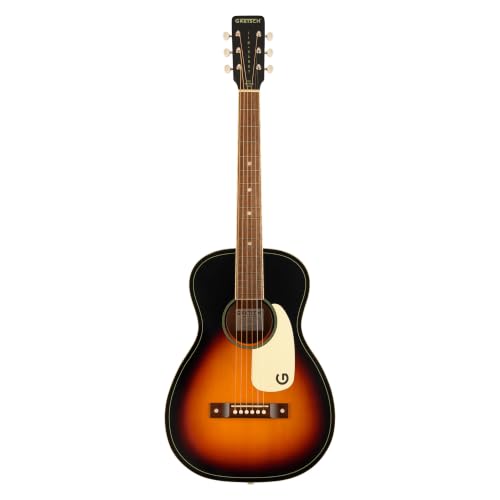
| Spec | Fender CP-60S | Gretsch Jim Dandy Parlor |
|---|---|---|
| Body shape | Parlor | Parlor |
| Top | Solid Spruce | Laminate top (tonewood not published) |
| Back and sides | Laminated Mahogany | Not published in listing |
| Neck and fingerboard | Mahogany neck with walnut fingerboard | Nato neck, walnut fingerboard |
| Scale length | 24.75" | Not published in listing |
| Nut width | Not published in listing | Not published in listing |
| Electronics | Not published in listing | None listed |
| Tuners | Chrome Die-Cast | Not published in listing |
| Finish | 3-Color Sunburst | Rex Burst |
| Included accessories | Case not included | Not published in listing |
Body, Neck and Playability
Both models use a parlor body shape, which keeps the instrument compact and comfortable for seated practice. The Fender CP-60S pairs that shape with a mahogany neck and a walnut fingerboard, and it publishes a 24.75 inch scale length. The Gretsch Jim Dandy Parlor also has a walnut fingerboard but uses a nato neck, and its scale length is not published in the listing. Neither listing states the nut width, so players with specific neck profile preferences will need to confirm that detail separately.
Playability scores are identical at 22 out of 30, which suggests that on paper the two guitars should feel similar in the hands for basic fretting and chord work. The Fender's known short scale length is a practical advantage because it reduces string tension and can make bends and stretches easier for beginners and fingerstyle players. The Gretsch does not reveal its scale length, so a buyer cannot verify how short or relaxed its string feel will be.
The parlor body on both models keeps the lower bout narrow, so the guitar does not dig into the forearm during seated playing. The Fender's walnut fingerboard and the Gretsch's walnut fingerboard are the same material, so the surface feel should be similar on paper. The neck woods differ, with mahogany on the Fender and nato on the Gretsch, and both are common in budget acoustics. Without published nut widths, players with wider or narrower preferences cannot easily compare string spacing.
Tone and Projection
The Fender CP-60S holds a clear advantage in the tone category with a score of 18 out of 25, compared to the Gretsch Jim Dandy Parlor's 14. The Fender uses a solid spruce top over laminated mahogany back and sides, which produces clear attack and midrange warmth on paper. The Gretsch has a laminate top with the tonewood not published, and the listing does not state the back and sides materials, which limits tone predictions.
Both parlor guitars will have less low end projection than a larger dreadnought, and neither is designed to fill a room with bass. The Fender's solid spruce top should deliver better dynamic response and articulation for fingerstyle and light strumming. The Gretsch's laminate top will be more consistent but will likely sound more compressed and modest in output.
For projection, the Fender's solid top is likely to push more air and produce a louder, more detailed sound than a laminate top of the same size. The Gretsch's modest projection is noted in its cons, and its laminate top limits dynamic range, so it will suit intimate settings rather than group jams. Buyers who want a parlor that can still be heard clearly should lean toward the Fender on paper.
Hardware and Electronics
Neither model includes built-in electronics or a pickup according to the listings. The Fender CP-60S does publish its tuner type as chrome die-cast, which is a practical and common hardware choice for this price tier. The Gretsch Jim Dandy Parlor does not publish its tuners or other hardware details, so buyers cannot evaluate that part of the build from the listing alone.
The Fender's hardware score is 7 out of 10, while the Gretsch earns 5 out of 10, reflecting the published versus unknown hardware details. The Fender CP-60S also states explicitly that a case is not included, which is common but worth noting for transport and storage. The Gretsch's listing does not publish whether any case, gig bag, or accessory is included, which adds another unknown for buyers to verify.
Build Quality and Finish
The Fender CP-60S has a higher build and materials score at 11 out of 15, compared to 8 out of 15 for the Gretsch Jim Dandy Parlor. The Fender uses a solid spruce top, laminated mahogany back and sides, and a 3-Color Sunburst finish. The Gretsch uses a laminate top with an unspecified tonewood and a Rex Burst finish, but its back and sides materials are not published.
A solid top generally offers better resonance and a more complex sound than a laminate top, which supports the Fender's higher score. The Fender's known hardware and finish details also make it easier to assess overall build quality. The Gretsch's vintage look and simple design are appealing, but the unknowns around back, sides, and tuners make a full build quality evaluation difficult from the listing.
Setup Out of the Box
Neither listing publishes any information about factory setup, string action, or fret work out of the box. For the Fender CP-60S, the known 24.75 inch scale and the published nut width absence mean a buyer cannot predict the exact string spacing. The Gretsch Jim Dandy Parlor does not publish scale length or nut width, so its setup geometry is even less clear.
Budget acoustics in this range often benefit from a professional setup after purchase, but we cannot confirm whether either model needs more or less adjustment. The Fender's solid spruce top and known hardware suggest a more straightforward baseline, while the Gretsch's unknown specifications make it harder to anticipate. Buyers should plan to evaluate action and neck relief themselves after unboxing.
Daily Use and Practice
Both parlor bodies are well suited to daily practice because they are small, light, and comfortable when sitting on a couch or chair. The Fender CP-60S adds the advantage of a published 24.75 inch scale, which many players find easier on the hands during long practice sessions. The Gretsch Jim Dandy Parlor has a vintage inspired look that can inspire practice, but without a published scale length its comfort level is less certain.
The Gretsch's laminate top is more resistant to humidity swings, so it can sit out on a stand with less worry than a solid wood top. The Fender's solid spruce top will require a bit more attention to humidity but rewards that care with more nuanced tone. Neither guitar has electronics, so both are purely acoustic practice instruments without the option to plug into headphones for quiet playing.
Versatility and Styles
Both models score 6 out of 10 for versatility, which reflects their focused parlor design and lack of electronics. The Fender CP-60S works well for fingerstyle, light strumming, and singer songwriter material thanks to its clear solid spruce top and short scale. The Gretsch Jim Dandy Parlor is aimed at old time blues, folk, and vintage style tunes, where its simple acoustic voice and compact shape fit naturally.
Neither guitar is built for loud stage work or heavy flatpicking, and the absence of a pickup limits live use without an external microphone. The Fender may stretch a bit further into modern acoustic styles because of its clearer attack and known hardware. The Gretsch is more of a specialized vintage vibe tool, which is fine for players who want that specific character.
The Deciding Question
The main choice comes down to published specifications and tonal potential versus vintage style and low maintenance simplicity. The Fender CP-60S gives you a solid spruce top, a known 24.75 inch scale, chrome die-cast tuners, and higher scores for tone, build, hardware, and overall performance. The Gretsch Jim Dandy Parlor offers a laminate top that shrugs off humidity changes, a charming Rex Burst finish, and a no frills design, but it leaves scale length, tuners, back and sides, and accessory details unpublished.
If you want the most complete and transparent package on paper, the Fender is the safer and higher scoring choice. If you are drawn to the Gretsch name, the vintage parlor aesthetic, and do not need a solid top or published specs, the Jim Dandy can still be a satisfying couch companion. The deciding factor is whether known performance data and a solid top matter more than vintage looks and laminate stability.
Who Should Buy Which
Buy the Fender CP-60S if you want a compact parlor acoustic with a solid spruce top, a short 24.75 inch scale for easy play, and clearer hardware details at a budget price. It fits beginners, fingerstyle players, and anyone who wants a recognizable brand with a more articulate sound. Avoid it if you need built-in electronics, a case included, or exact nut width measurements before purchase.
Buy the Gretsch Jim Dandy Parlor if you want a small bodied vintage inspired acoustic for couch practice, old time blues, and folk, and you prefer a laminate top that resists humidity changes. It suits players who do not need loud projection, a pickup, or detailed specs. Avoid it if you need a stage ready acoustic with electronics, rich bass, or full published specifications.
Fender CP-60S
Pros
- Solid spruce top for clear attack and response
- Short 24.75 inch scale reduces string tension
- Compact parlor body is comfortable for seated practice
- Walnut fingerboard offers a smooth feel on paper
- Chrome die-cast tuners are a practical hardware choice
Cons
- No case included in the listing
- Laminated back and sides rather than solid wood
- No electronics or pickup described
- Nut width is not published in the listing
- Limited low end projection compared to a dreadnought
Gretsch Jim Dandy Parlor
Pros
- Vintage parlor style at budget price
- Compact body is easy to hold
- Laminate top resists humidity changes
- Walnut fingerboard feels smooth
- Simple acoustic design with no batteries
Cons
- Laminate top limits dynamic range
- Back and sides materials are not published
- No electronics or pickup
- Tuners and hardware details not specified
- Projection may be modest
Who Should Buy Each
Fender CP-60S
- Fingerstyle players wanting a smaller body and short scale
- Beginners looking for a recognized brand with a solid top
- Players with smaller hands or those who find dreadnoughts uncomfortable
- Anyone wanting an affordable parlor for practice, travel, or couch playing
Gretsch Jim Dandy Parlor
- Beginners looking for an affordable first guitar
- Players with smaller hands who prefer a compact body
- Travelers and couch pickers who want a lightweight acoustic
- Fans of vintage parlor styling and budget friendly instruments
Quick Decision Guide
| If you want a model with a solid spruce top and known short scale length | Choose Fender CP-60S |
| If you want a vintage inspired budget parlor with a laminate top for humidity resistance | Choose Gretsch Jim Dandy Parlor |
| If you want the model with published tuner details and better build material score | Choose Fender CP-60S |
| If you want a simple no electronics acoustic for couch practice and old time styles | Choose Gretsch Jim Dandy Parlor |
| If you want the higher overall score with stronger tone projection on paper | Choose Fender CP-60S |
FAQ
About This Comparison
Daniel Brooks
Daniel Brooks edits the buying guides and how-to articles at Mandrillis. He works from manufacturer manuals, published specifications and common owner questions to explain music and audio gear in plain language, from turntables and headphones to digital pianos and electronic drums.
Read our full research methodology.
We may earn a commission at no extra cost to you.