Epiphone ES-335 vs Gretsch G2622
Quick Verdict
The Epiphone ES-335 edges out the Gretsch G2622 overall with an 80 to 74 score, led by stronger playability and hardware marks and a classic Cherry finish with a mahogany neck. The Gretsch counters with a lower mid-range price, a modern Gunmetal look, a nato neck, and a confirmed center block. Choose the Epiphone for traditional semi-hollowbody aesthetics and slightly higher performance scores. Choose the Gretsch for budget friendly semi-hollowbody tone with a modern visual edge. Both listings omit scale length, fret count, bridge, tuners, and setup details, so buyers must accept some unknowns either way.
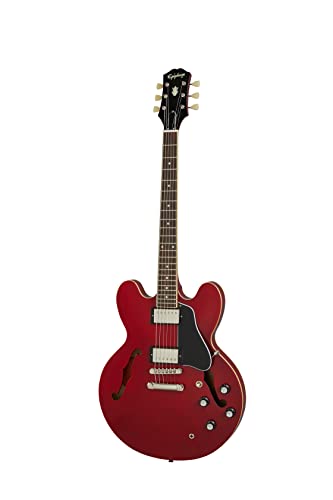

| Spec | Epiphone ES-335 | Gretsch G2622 |
|---|---|---|
| Body | Semi-hollowbody electric guitar with maple top, maple back and sides | Semi-hollowbody electric guitar with maple top; sides listed but not described in detail |
| Neck and fingerboard | Mahogany neck with laurel fingerboard | Nato neck with laurel fingerboard |
| Scale length | Not published in listing | Not published in listing |
| Frets | Not published in listing | Not published in listing |
| Pickups | 2 humbucking pickups | Two humbucking pickups (brand and model not published in listing) |
| Controls | Not published in listing | Not published in listing |
| Bridge | Not published in listing | Not published in listing |
| Tuners | Not published in listing | Not published in listing |
| Finish | Cherry | Gunmetal |
| Included accessories | Not published in listing | Not published in listing |
Body and Build
The Epiphone ES-335 and Gretsch G2622 are both semi-hollowbody electric guitars, but the published body materials differ in detail. The Epiphone listing specifies a maple top with maple back and sides, which provides a clear and complete picture of the body woods. The Gretsch listing confirms a maple top but says the sides are listed without detailed description. This gives the Epiphone an advantage in published build transparency for body tonewoods.
Despite the difference in published body details, both models are semi-hollowbody designs. The Gretsch listing explicitly mentions a center block in its pros, which can reduce feedback and add sustain. The Epiphone listing does not mention a center block, so buyers cannot confirm that feature from the supplied facts. This is a notable difference in available information.
Both guitars received the same Build and Materials score of 12 out of 15 in the supplied breakdown. This equal score suggests the known materials are competitive, even though the specific published details differ. Buyers who want a fully specified body wood list will prefer the Epiphone, while buyers who value a confirmed center block may note the Gretsch mention.
Neck and Playability
Neck materials differ between these models. The Epiphone uses a mahogany neck with a laurel fingerboard. The Gretsch uses a nato neck with a laurel fingerboard. Both share the same fingerboard wood, which may offer a similar feel under the fingers, but the neck wood is not identical.
Neither listing publishes the scale length or the fret count, which are key factors for playability. Without that information, buyers cannot compare string tension, fret spacing, or upper fret access on paper. The Epiphone playability score is 24 out of 30, while the Gretsch score is 20 out of 30. That four point gap is the largest single category difference between the two models.
The Gretsch pros mention a double-cutaway body for improved upper fret access, which suggests easier reach to higher frets. The Epiphone listing does not mention cutaway design in the supplied facts. However, the higher Epiphone playability score is notable, but the listing does not explain the reason for that advantage.
Pickups and Tone
Both guitars rely on a pair of humbucking pickups, which typically reduce noise compared to single coils. The Epiphone listing simply says two humbucking pickups with no brand or model. The Gretsch listing also says two humbucking pickups and explicitly states the brand and model are not published. This means buyers cannot compare output level, EQ curve, or magnet type.
The tone and pickup scores are close: Epiphone earns 20 out of 25 and Gretsch earns 19 out of 25. The one point difference is small and is not explained by the published pickup facts alone, since both listings describe the same basic pickup type and count. Any tonal difference would likely come from build materials, electronics, or setup, all of which are partly unknown.
The Epiphone pros mention warm and clear tones, while the Gretsch pros mention full, low noise tones. These are general descriptive claims, not measured data. Without control layouts or capacitor values, the real tone shaping potential is not comparable. Buyers who want a predictable tone may find both listings frustrating for the lack of detail.
Hardware and Electronics
Hardware specifications are largely absent from both listings. The Epiphone does not publish the bridge, tuners, or control layout. The Gretsch also does not publish the bridge, tuners, or controls, and its cons note unverified hardware quality without full documentation. This makes a direct hardware comparison impossible on paper.
The supplied scores show Epiphone at 8 out of 10 for Hardware and Electronics, while Gretsch is at 7 out of 10. Both models score reasonably well, but the Epiphone has a slight edge. The available facts do not identify which specific components earned that higher score, so buyers should treat that one point difference with caution.
Neither guitar lists included accessories such as a case, gig bag, cable, or strap. The listings both state included accessories are not published. Players who expect a ready to play package will need to account for those items separately, regardless of which guitar they choose.
Finish and Looks
The Epiphone ES-335 is offered in Cherry, a classic semi-hollowbody color associated with traditional rock, blues, and jazz. The Gretsch G2622 is offered in Gunmetal, a darker and more modern finish that sets it apart visually. The finish is the most obvious aesthetic difference between the two models.
The Gretsch listing highlights a double-cutaway body, while the Epiphone listing does not describe its cutaway shape. Since both are semi-hollowbody electric guitars, their overall visual footprint is similar, but the colors steer them in different directions. A traditionalist will likely prefer the Cherry finish on the Epiphone, while a player seeking a contemporary look will gravitate to the Gunmetal Gretsch.
Neither finish is objectively better, but they appeal to different tastes. The finishing process details, such as gloss level, are not published in either listing. Buyers should choose based on the color that matches their playing style and stage presence.
Setup and Accessories
Neither listing describes the factory setup quality or includes setup specifications such as action height, neck relief, or string gauge. The Epiphone cons explicitly state that setup quality out of the box is unknown from the listing. The Gretsch listing does not mention setup quality, but its incomplete specs suggest the same uncertainty for buyers.
Included accessories are not published for either guitar. This means no case, gig bag, or cable is confirmed. A first time buyer will need to purchase those items separately. The lack of included accessories is a shared limitation, not a differentiator.
For players who have a preferred guitar technician and plan to do their own setup, these unknowns may be acceptable. For those who want a guitar that feels right immediately without adjustment, the missing setup details are a risk. Both models require the buyer to trust the factory setup or budget for a professional setup.
Value
The Gretsch G2622 holds a value score of 9 out of 10, while the Epiphone ES-335 scores 8 out of 10. The Gretsch pros describe lower mid-range pricing, while the Epiphone pros describe mid-range price tier. This suggests the Gretsch is the more affordable option, which aligns with its higher value score.
However, value is not only about the lowest price. The Epiphone has a higher overall score of 80 compared to the Gretsch at 74, driven by better playability and hardware scores. Buyers who prioritize performance metrics may see the Epiphone as worth the extra cost, even if its value score is slightly lower.
Both guitars leave out numerous specifications, so both carry some uncertainty regardless of price. A buyer who values a confirmed traditional body wood list and mahogany neck may accept the Epiphone's higher price. A buyer who wants the most affordable entry into a semi-hollowbody with a center block may find the Gretsch to be the better value.
The Deciding Question
The main deciding question is whether buyers prefer the Epiphone's traditional Cherry finish, mahogany neck, and higher overall score, or the Gretsch's modern Gunmetal finish, nato neck, and lower price. Both guitars have similar build materials in the sense of semi-hollowbody with maple top, but they differ in neck wood, finish, and published details.
Another way to frame the decision is around tolerance for incomplete specifications. The Epiphone omits bridge, tuners, scale length, and setup details. The Gretsch omits the same categories and also leaves control layout and hardware quality unverified. A buyer who finds missing specs unsettling may not feel comfortable with either option.
For most players, the choice will come down to aesthetics and score preferences. If the Cherry ES style and the slightly higher tone, playability, and hardware scores appeal, the Epiphone is the choice. If the Gunmetal look and confirmed value edge are more important, the Gretsch is the practical pick.
Who Should Buy Which
Choose the Epiphone ES-335 if you want a traditional semi-hollowbody with a Cherry finish, a mahogany neck, and a laurel fingerboard. This model is best for the player described in the listing as someone who wants a classic semi-hollowbody electric guitar at a mid-range price with traditional looks. Its higher playability and tone scores make it the stronger choice for players who prioritize performance over the lowest price.
Choose the Gretsch G2622 if you want an affordable semi-hollowbody with a modern Gunmetal finish, a nato neck, a laurel fingerboard, and a confirmed center block. The listing positions it for blues, rock, indie, and jazz players who appreciate a double-cutaway body for upper fret access. Its value score is higher, making it appealing for budget conscious buyers.
Avoid the Epiphone if you need complete published specifications for pickups, hardware, scale length, and setup before buying. Avoid the Gretsch if you require exact specs for scale length, frets, bridge, tuners, and control layout, or if you need a fully accessorized package. Both models ask the buyer to accept some missing details.
Epiphone ES-335
Pros
- Classic semi-hollowbody design with maple top, back and sides
- Mahogany neck with laurel fingerboard for familiar feel
- Two humbucking pickups cover warm and clear tones
- Cherry finish gives a traditional look
- Mid-range price tier for a semi-hollow model
Cons
- Listing omits pickup brand and output details
- Scale length, fret count, bridge and tuner specs not published
- No included case or gig bag mentioned
- Setup quality out of the box is unknown from listing
Gretsch G2622
Pros
- Semi-hollowbody with maple top and center block for balanced resonance
- Two humbucking pickups should provide full, low noise tones
- Nato neck and laurel fingerboard are proven budget tonewoods
- Double-cutaway body improves upper fret access
- Gunmetal finish offers a modern look
- Lower mid-range pricing makes semi-hollow design accessible
Cons
- Listing omits scale length, fret size, bridge and tuner details
- Pickup brand and model are not published
- No included accessories are listed
- Control layout and electronics functions are unknown
- Unverified hardware quality without full documentation
Who Should Buy Each
Epiphone ES-335
- Blues and classic rock players who like warm semi-hollow tones
- Guitarists stepping up from a solid body to a semi-hollow
- Buyers who value a recognizable ES-style silhouette without a premium price
- Home players and gigging musicians who already know how to set up a guitar
Gretsch G2622
- A player stepping up from a basic solidbody who wants an affordable semi-hollow voice
- A home or stage guitarist who likes humbucker warmth with a double-cutaway body
- Someone who prefers a modern gunmetal finish over vintage sunburst or natural semi-hollow looks
- A buyer comfortable evaluating a guitar from listing details and general Gretsch Streamliner reputation
Quick Decision Guide
| If you want a traditional Cherry semi-hollowbody with a mahogany neck | Choose Epiphone ES-335 |
| If you want a modern Gunmetal finish at a lower mid-range price | Choose Gretsch G2622 |
| If higher playability and tone scores are your main priority | Choose Epiphone ES-335 |
| If a confirmed center block and budget friendly value are most important | Choose Gretsch G2622 |
| If you prefer a double-cutaway body listed for upper fret access | Choose Gretsch G2622 |
FAQ
About This Comparison
Daniel Brooks
Daniel Brooks edits the buying guides and how-to articles at Mandrillis. He works from manufacturer manuals, published specifications and common owner questions to explain music and audio gear in plain language, from turntables and headphones to digital pianos and electronic drums.
Read our full research methodology.
We may earn a commission at no extra cost to you.