Casio Celviano AP-750 vs Kawai DG30
Quick Verdict
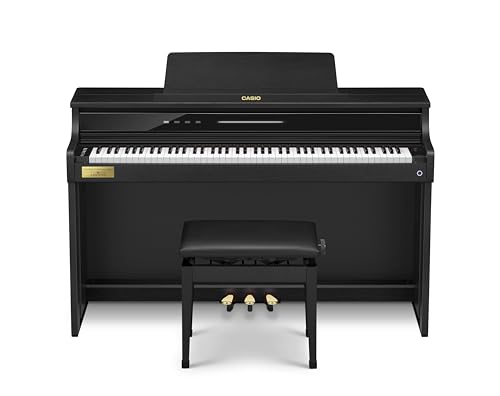
Both models score 88 but serve different spaces. The Casio Celviano AP-750 is the better upright cabinet console for players who want Casio's most refined Smart Hybrid Hammer Action, an eight speaker 40 watt Grandphonic system, and an included adjustable bench. The Kawai DG30 is the choice when the room demands a compact digital grand in ebony polish. It adds Bluetooth audio and MIDI, USB to Host and Device, line in and out, and a Progressive Harmonic Imaging engine with three sampled grands. Choose the Casio for maximum published build and speaker detail in a traditional console. Choose the Kawai for the grand silhouette and broader connectivity. Neither listing publishes polyphony, and the Kawai listing does not publish voice count or speaker wattage.

| Spec | Casio Celviano AP-750 | Kawai DG30 |
|---|---|---|
| Key Action | Smart Hybrid Hammer Action with internal counterweights | Responsive Hammer III with let-off, triple sensors and Ivory Touch |
| Sound Engine | Casio AiR Grand with damper, string and lid resonance | Progressive Harmonic Imaging with 88-key sampling of SK-EX, SK-5 and EX |
| Voices | 39 | Not published in listing |
| Polyphony | Not published in listing | Not published in listing |
| Speakers | 40 W, 8 speakers, Grandphonic | Built-in system in a grand cabinet |
| Bluetooth | Audio and MIDI via app | MIDI and audio (4.1) |
| USB | USB to Host | USB to Host and Device; line in and out |
| Pedals | 3 pedals built in | 3 pedals |
| Weight | Not published in listing | Not published in listing |
| Form Factor | Flagship cabinet console with adjustable bench | Compact digital grand in ebony polish |
Key Action
The Casio Celviano AP-750 uses Smart Hybrid Hammer Action with internal counterweights. The listing calls it the most refined Casio keyboard below the Grand Hybrid series. The Kawai DG30 uses Responsive Hammer III with let-off, triple sensors and Ivory Touch key surfaces. Both models receive an identical action score of 28 out of 30.
The Casio listing does not mention triple sensors or let-off, so direct specification comparison on those points is not possible. The Kawai listing states that the RHIII action is the same action found in Kawai CN consoles, which positions it as a proven midrange design. The Casio listing contrasts its action with wooden keys from Kawai or Yamaha at this price, implying that the AP-750 does not use wooden key sticks. Buyers who want wooden keys should note that difference.
Both actions score well, so the choice is less about overall quality and more about design details. Casio highlights internal counterweights; Kawai highlights let-off and triple sensors. The Kawai's Ivory Touch surface is also a published touch detail, while the Casio listing does not describe a key surface texture. Players who focus on repetition and escapement simulation may lean toward the Kawai on paper, while those who focus on weighted feel may lean toward the Casio.
Piano Sound and Speakers
The Casio AP-750 uses the AiR Grand engine with damper, string and lid resonance. The Kawai DG30 uses Progressive Harmonic Imaging with 88-key sampling of the SK-EX, SK-5 and EX concert grands. The Kawai listing also mentions Acoustic Rendering resonances. Piano sound scores are close: Casio 24, Kawai 25.
Speaker power is published for the Casio at 40 watts and eight speakers under the Grandphonic name, with Hall Simulation. The Kawai listing says only that the DG30 has a built-in system in a grand cabinet; it does not publish wattage or driver count. Voice count is 39 for the Casio, while the Kawai listing does not publish voices. Neither listing publishes polyphony.
Features and Modes
The Casio AP-750 offers 39 voices, Hall Simulation and three built-in pedals. Bluetooth audio and MIDI are available via an app. The Kawai DG30 offers three sampled grands with Acoustic Rendering, three pedals, Bluetooth MIDI and audio version 4.1, USB to Host and Device, and line in and out. Both models have identical feature scores of 13 out of 15.
Neither listing publishes a full list of modes such as metronome, recording, lesson, or accompaniment features. The Casio is more transparent about its voice count, while the Kawai is more transparent about its physical connections. Buyers who need a specific mode should confirm directly because the supplied facts do not state these details.
Build, Design and Portability
The Casio AP-750 is a flagship cabinet console with an adjustable bench included. The Kawai DG30 is a compact digital grand in ebony polish. The Casio has a build and portability score of 10; the Kawai has 8. Neither listing publishes weight, so actual portability cannot be compared directly.
The Kawai listing states that the DG30 is heavy and delivered rather than carried. The Casio listing does not state delivery or weight, but as a flagship cabinet console it is clearly intended to stay in one place. The design difference is the main point: an upright console versus a grand-shaped cabinet. The Casio includes a bench; the Kawai listing does not mention one.
Connectivity
The Casio AP-750 has Bluetooth audio and MIDI via an app and USB to Host. The Kawai DG30 has Bluetooth MIDI and audio version 4.1, USB to Host and Device, and line in and out. Kawai earns a connectivity score of 10, while Casio earns 8.
The Kawai offers more physical connection options: USB to Device can connect storage or other devices, and line in and out allow external audio routing. The Casio depends on USB to Host for computer or tablet connections and does not list USB to Device or line level jacks. Neither listing publishes MIDI DIN connectors.
Setup and Accessories
The Casio AP-750 includes an adjustable bench, and both models have three built-in pedals. The Kawai DG30 listing does not mention a bench. Neither listing publishes a weight, so setup difficulty cannot be confirmed from the supplied specs.
The Kawai listing notes that the DG30 is heavy and delivered rather than carried, which suggests professional delivery is typical. The Casio listing does not state delivery or assembly details. Published accessories are limited: the Casio bench is the only explicit extra item beyond the pianos themselves and their pedals.
Daily Use
For daily playing, the Casio AP-750 offers a specific 40 watt eight speaker system with Hall Simulation, which gives buyers a clear expectation of room-filling sound. The Kawai DG30 has a built-in system in a grand cabinet, but without published wattage or drivers the acoustic output is harder to compare on paper.
The Casio listing lists touch controls as a con, so some users may prefer physical buttons. The Kawai listing does not specify its control type. The Casio has 39 voices; the Kawai voice count is not published. Both have three pedals built in. Neither listing publishes headphone jack details or whether a headphone hook or dust cover is included.
The Deciding Question
The deciding question is whether you want an upright console or a digital grand. Both models tie at 88 overall, with identical action and feature scores. The Casio scores higher on build and portability and value; the Kawai scores higher on piano sound and connectivity. The difference is more about form factor and connection ports than about keyboard mechanism.
If you want a traditional console with a published eight speaker 40 watt system and an included adjustable bench, the Casio AP-750 fits. If you want a grand-shaped cabinet with USB to Device, line in and out, and Bluetooth audio and MIDI, the Kawai DG30 is the choice. Neither listing publishes polyphony, so that common spec cannot settle the tie.
Who Should Buy Which
Choose the Casio Celviano AP-750 if you want Casio's best console action below the Grand Hybrid series, the AiR Grand engine with damper, string and lid resonance, and the most published speaker detail in this comparison. It suits buyers who want an adjustable bench included and do not need a grand-shaped cabinet or USB to Device and line in and out.
Choose the Kawai DG30 if the room calls for a compact digital grand in ebony polish and you want full connectivity with Bluetooth MIDI and audio, USB to Host and Device, and line in and out. It suits buyers who value the grand silhouette and Kawai's three sampled concert grands over the maximum action per dollar, since the RHIII action is the same found in Kawai CN consoles.
Casio Celviano AP-750
Pros
- Hybrid action with internal counterweights, the most refined Casio keyboard below the Grand Hybrids
- AiR Grand engine with damper, string and lid resonance
- 40 watt eight-speaker Grandphonic system with Hall Simulation
- Adjustable bench included
Cons
- Polyphony not published on the listing
- Flagship price against Kawai CA and Yamaha Clavinova consoles
- Touch controls
Kawai DG30
Pros
- Compact digital grand cabinet in ebony polish
- RHIII action with let-off and triple sensors
- Three sampled grands with Acoustic Rendering resonances
- Bluetooth MIDI and audio, USB to device, line in and out
Cons
- Grand cabinet price for the RHIII action
- Polyphony and speaker power not stated on the listing
- Heavy and delivered rather than carried
Who Should Buy Each
Casio Celviano AP-750
- You want counterweighted hybrid keys and an eight-speaker system
- The piano will be the centerpiece of a living room
- You want the bench included and Bluetooth through the app
Kawai DG30
- The room calls for a grand-shaped Kawai
- You want three grands with Acoustic Rendering and the Virtual Technician
- Bluetooth, USB recording and line in and out matter
Quick Decision Guide
| If you want an upright console with an adjustable bench included and published 40 watt eight speaker system | Choose Casio Celviano AP-750 |
| If you want a compact digital grand in ebony polish with USB to Device and line in and out | Choose Kawai DG30 |
| If you want the higher piano sound score in this comparison, 25 versus 24 | Choose Kawai DG30 |
| If you want the higher build and portability score and more published speaker details | Choose Casio Celviano AP-750 |
| If you are ranking by the published value score alone, where 5 beats 4 | Choose Casio Celviano AP-750 |
FAQ
About This Comparison
Mandrillis Team
The Mandrillis editorial team researches and compares audio and music gear using manufacturer documentation, verified specs and real buyer feedback, so you can make a confident purchase without wading through marketing claims.
Read our full research methodology.
We may earn a commission at no extra cost to you.