Bromo BAR 6H vs Washburn Comfort G-Mini 55 Koa
Quick Verdict
The Bromo BAR 6H is the stronger choice for players who prioritize all-solid tonewoods and a traditional 12-fret parlor voice. Its solid spruce top and solid mahogany back and sides suggest warmer, more resonant tone than the Washburn, and the score difference supports that. Choose the Bromo for fingerstyle, blues, and focused practice, provided you can accept unknown fingerboard and tuner details. Choose the Washburn Comfort G-Mini 55 Koa if you need a more portable compact body with a known ebony fingerboard, included gig bag, and refined 18:1 tuners, and you can tolerate a conflicting tonewood listing and likely laminate back and sides.

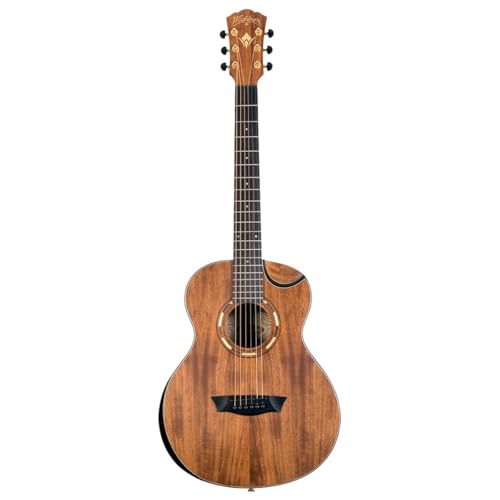
| Spec | Bromo BAR 6H | Washburn Comfort G-Mini 55 Koa |
|---|---|---|
| Body shape | Parlor | 7/8-sized Grand Auditorium with comfort carve-away |
| Top | Solid Spruce | Solid spruce |
| Back and sides | Solid Mahogany | Mahogany |
| Neck and fingerboard | Mahogany with 2 Amara Ebony reinforcement strips; fingerboard material not published in listing | Ebony fingerboard; neck wood not published in listing |
| Scale length | 632.4 mm (24 29/32 in) | 23-1/4 inches |
| Nut width | 43.5 mm (1 23/32 in) | 1-11/16 inches |
| Electronics | Not published in listing | Not published in listing |
| Tuners | Not published in listing | 18:1 gold die cast with ebonite buttons |
| Finish | Not published in listing | Natural |
| Included accessories | Not published in listing | Gig bag |
Body, Neck and Playability
The Bromo BAR 6H uses a parlor body with a 12 fret neck joint, while the Washburn Comfort G-Mini 55 Koa uses a 7/8 sized Grand Auditorium with a comfort carve-away. The Bromo has a scale length of 632.4 mm, and the Washburn scale is listed as 23 1/4 inches. The Bromo nut width is 43.5 mm, and the Washburn nut width is 1 11/16 inches. Both have compact dimensions, but the Washburn body cutaway is the more unusual feature for upper fret access.
The Bromo neck is mahogany with two Amara Ebony reinforcement strips, and its fingerboard material is not published in the listing. The Washburn has an ebony fingerboard, but its neck wood is not published. The Bromo is described as having a low oval neck shape, which may suit players who prefer a shallow grip. The Washburn listing does not describe neck shape, so direct playability comparison is limited by missing details.
The shorter scale of the Washburn, at 23 1/4 inches, reduces string tension and reach, which can help beginners or players with smaller hands. The Bromo scale of 632.4 mm is also short, but slightly longer than the Washburn, and its 43.5 mm nut width is slightly wider than the 1 11/16 inch nut on the Washburn. Neither listing gives a fingerboard radius, so curvature and comfort in that dimension remain unknown.
Tone and Projection
The Bromo BAR 6H has a solid spruce top and solid mahogany back and sides, which usually produces a warm, focused voice with good dynamic range. The Washburn also lists a solid spruce top, but its back and sides are listed only as mahogany, not explicitly solid, and one part of the listing conflicts with the title. Without a pickup or electronics published for either model, the acoustic voice is the only sound source to consider.
The Bromo's parlor body and 12 fret neck joint tend to emphasize midrange and sweetness over heavy bass, and the all solid construction suggests more resonance than typical laminate. The Washburn's 7/8 Grand Auditorium shape with solid top may give a balanced response, but the smaller body and likely laminate back and sides can reduce overall projection and depth. Both models score 22 out of 25 for tone for the Bromo and 18 out of 25 for the Washburn.
Listeners should not expect either guitar to compete with a full size dreadnought in loudness. The Bromo may offer better sustain and overtone complexity because of the solid mahogany back and sides, while the Washburn's solid top helps clarity but not necessarily low end. Since the listing does not state the Washburn back and sides as solid, the tonal advantages of solid wood likely favor the Bromo.
Hardware and Electronics
Neither guitar has onboard electronics or a pickup specified in the listing. The Bromo listing does not publish any electronics details, and the Washburn listing also says electronics are not published. Players who need to plug into an amplifier or PA system would have to add an aftermarket pickup or choose a different model.
The Washburn has 18:1 ratio gold die cast tuners with ebonite buttons, which are a specific and relatively premium tuning machine detail. The Bromo listing does not publish tuner brand, ratio, or finish type, so its hardware quality is unknown. Both models receive a hardware and electronics score of 7 out of 10.
The Washburn comes with a gig bag, which adds practical value for transport and storage. The Bromo listing does not publish any included accessories. The Washburn also mentions Graph Tech NuBone nut and saddle, which can improve sustain and tuning stability, while the Bromo does not specify nut or saddle materials.
Build Quality and Finish
The Bromo BAR 6H uses all solid tonewoods, which typically indicates a higher level of build quality and attention to resonance. The mahogany neck with Amara Ebony reinforcement strips is an interesting structural detail. However, the Bromo finish type is not published, so buyers cannot assess durability or feel from the listing.
The Washburn Comfort G-Mini 55 Koa lists a natural finish, an ebony fingerboard, and an ebony bridge. Those are premium touches on a lower mid range guitar. The main build concern is a conflict in the Washburn listing: the title says koa top back and sides, but the feature bullet says solid spruce top and mahogany back and sides. That inconsistency makes the actual materials uncertain.
The Bromo scores 13 out of 15 on build and materials, while the Washburn scores 11 out of 15. The Bromo's all solid construction is the stronger foundation on paper, even though its fingerboard material is missing. The Washburn's known ebony fingerboard helps playability, but the likely laminate back and sides and conflicting description reduce confidence.
Setup Out of the Box
The listings do not state the action height, relief, or setup measurements for either guitar, and this editorial review is based on published specs, not in-person adjustment. The Bromo's short scale and 12 fret design may arrive with comfortable playability for fingerstyle, but players should check the action and intonation.
The Washburn's compact 7/8 body and Graph Tech NuBone nut and saddle are likely to provide a consistent starting point, but the listing does not describe factory setup quality. The ebony fingerboard on the Washburn is a smooth surface, which may help with left hand comfort, but actual action depends on saddle and nut slot height.
Buyers should plan to have either guitar adjusted to their string gauge and playing style. Without published setup specs, no direct comparison of out of box playability is possible. A return policy or local technician visit is recommended.
Daily Use and Practice
For daily practice at home, the Bromo BAR 6H has a compact parlor body that is easy to hold on a couch or chair, and its all solid construction suggests a rewarding acoustic tone for unplugged sessions. The 12 fret neck joint and short scale reduce reach across the fingerboard. The low oval mahogany neck is aimed at comfortable chording.
The Washburn Comfort G-Mini 55 Koa is even more travel friendly with its 7/8 body, carve-away, and included gig bag. The short 23 1/4 inch scale lowers string tension, which can make longer practice sessions easier on the fingers. The ebony fingerboard is smooth, though the neck wood is not stated.
The Bromo has no known gig bag, so moving it around may require an additional case. The Washburn's cutaway does not compromise the overall small size, and the gold die cast tuners with ebonite buttons look refined for a practice companion. The Bromo scores 26 out of 30 for playability, while the Washburn scores 22 out of 30.
Versatility and Styles
The Bromo BAR 6H is best suited to fingerstyle, blues, folk, and singer songwriter material where a warm, intimate parlor voice is desirable. Its all solid spruce and mahogany pairing should handle light to moderate strumming, but heavy flatpicking may overdrive the small body. The 43.5 mm nut width gives a bit more room for fingerpicking.
The Washburn Comfort G-Mini 55 Koa, with its solid spruce top and compact grand auditorium shape, is versatile for strumming, light picking, and travel use. The smaller body and likely laminate back and sides may not produce the deep bass of a full size guitar, but the tone should be balanced. Both models score 8 out of 10 for versatility.
Neither guitar includes electronics in the listing, so stage amplification requires an external microphone or added pickup. The Bromo's 12 fret parlor design is more specialized, while the Washburn's 7/8 body covers general practice and casual playing. Players who need one guitar for many styles may prefer the Washburn for its cutaway and gig bag, but the Bromo offers more all solid resonance for fingerstyle.
The Deciding Question
The core choice is between all solid traditional parlor construction and a compact travel friendly solid top with premium known appointments. The Bromo BAR 6H offers solid spruce top plus solid mahogany back and sides, a 12 fret neck joint, and a low oval neck, but the fingerboard material and tuner details are not published. The Washburn offers a known ebony fingerboard, specific tuners, and included gig bag, but the tonewood description is conflicting.
If tonal richness and the benefits of all solid wood matter most, the Bromo is the more convincing option on paper. Its 85 overall score reflects stronger tone and build scores. If you need a smaller body that is ready to travel with a gig bag and detailed hardware, the Washburn's 76 score still reflects good value.
For players who do not require onboard electronics, both are viable, but the choice hinges on whether you prefer the unknown hardware of an all solid parlor or the known hardware of a compact solid top with potential tonewood confusion. A in-person trial is recommended because the listings cannot confirm actual feel.
Who Should Buy Which
Buy the Bromo BAR 6H if you want an all solid 12 fret parlor for fingerstyle, blues, and intimate practice, and you can accept that the fingerboard material and tuner brand are not listed. Its solid spruce and mahogany construction suggests a warm, resonant voice that rewards close listening. Choose this if you prefer a slightly wider nut and shorter scale over a full size dreadnought.
Buy the Washburn Comfort G-Mini 55 Koa if you are a traveling player, a smaller framed guitarist, or anyone who wants a compact solid top guitar with an ebony fingerboard, 18:1 tuners, and an included gig bag. The carve-away body improves upper fret access, and the short scale lowers string tension. Accept that the back and sides are likely laminate and the tonewood listing is not fully clear.
Avoid the Bromo if you need built in electronics, a loud dreadnought voice, or very wide spacing, none of which are offered. Avoid the Washburn if you demand all solid tonewoods or a full size guitar with deep bass, because this model is compact and its back and sides are not confirmed solid. Both are lower mid range options that emphasize playability over stage ready features.
Bromo BAR 6H
Pros
- All solid spruce top and mahogany back and sides
- 12 fret neck joint with compact parlor body
- Low oval mahogany neck with Amara ebony reinforcement strips
- 632.4 mm short scale for easy reach
- 43.5 mm nut width and 47 mm zero fret width for comfortable fingerstyle
- No onboard electronics to maintain
Cons
- Fingerboard material and fingerboard radius not published
- Tuner brand, ratio and finish type not listed
- No onboard pickup or preamp specified
- Included accessories not published
Washburn Comfort G-Mini 55 Koa
Pros
- Solid spruce top adds clarity and dynamic range
- Compact 7/8 body with carve-away improves comfort
- Ebony fingerboard and bridge are premium touches
- Graph Tech NuBone nut and saddle support sustain
- Included gig bag makes travel convenient
- Gold die cast tuners with ebonite buttons look refined
Cons
- Listing title and feature bullet conflict on tonewoods
- No electronics or pickup specified
- Neck wood not published in listing
- Shorter scale may not suit players wanting full size feel
- Back and sides likely laminate, not stated as solid
Who Should Buy Each
Bromo BAR 6H
- Fingerstyle and blues players who prefer a compact all solid body
- Intermediate players upgrading from laminate starter guitars
- Home recording players who use microphones instead of pickups
- Acoustic purists who want a simple grab and go instrument
Washburn Comfort G-Mini 55 Koa
- Beginners seeking an easy to hold travel guitar
- Guitarists who prioritize comfort and portability
- Players wanting a solid spruce top on a lower mid-range budget
- Those who prefer a shorter scale for fingerstyle or small hands
Quick Decision Guide
| If you want an all solid parlor for fingerstyle and blues | Choose Bromo BAR 6H |
| If you need a compact travel guitar with an included gig bag and known tuners | Choose Washburn Comfort G-Mini 55 Koa |
| If you prefer a slightly wider nut and 12 fret neck joint | Choose Bromo BAR 6H |
| If you value an ebony fingerboard and smooth premium appointments | Choose Washburn Comfort G-Mini 55 Koa |
| If you want maximum unplugged resonance from solid wood construction | Choose Bromo BAR 6H |
FAQ
About This Comparison
Daniel Brooks
Daniel Brooks edits the buying guides and how-to articles at Mandrillis. He works from manufacturer manuals, published specifications and common owner questions to explain music and audio gear in plain language, from turntables and headphones to digital pianos and electronic drums.
Read our full research methodology.
We may earn a commission at no extra cost to you.